My First Impression of Kuala Lumpur: A Foreigner's Journey Through Malaysia, Culture, and Daily Life
My first trip to Kuala Lumpur started from Bangkok.
The journey was not as smooth as expected. My flight schedule was changed, and I ended up waiting at the airport for almost five extra hours.
After a long wait, I finally arrived in Kuala Lumpur on the same day.
When I walked out of the airport, I felt a mixture of curiosity, excitement, and happiness.
This was a city I had wanted to explore for a long time.
Malaysia has always attracted my attention because of its unique multicultural background, especially its large Chinese Malaysian community and the preservation of Chinese language and culture overseas.
I wanted to see what this country was really like.
This article is not a travel guide.
It is my personal experience and first impression of Kuala Lumpur as someone who has lived in Southeast Asia for years.
My First Impression of Malaysia's Chinese Community
Before visiting Malaysia, I had heard many stories about the Chinese Malaysian community.
Unlike many overseas Chinese communities around the world, Malaysia has maintained a strong Chinese cultural identity in many areas, especially through language, education, and local communities.
Many Chinese Malaysians have worked hard for generations to preserve Chinese-language education and cultural traditions.
This history left a deep impression on me.
For many overseas Chinese families, maintaining language and culture was not always easy.
It required:
- Building local communities
- Supporting Chinese schools
- Passing traditions between generations
This long-term effort is one of the unique characteristics of Malaysia.
When traveling through Southeast Asia, I have met many overseas Chinese people.
The Malaysian Chinese community often left a particularly strong impression on me because of their connection to both Malaysian society and Chinese cultural heritage.
They represent a very interesting combination:
- Southeast Asian lifestyle
- Chinese language and traditions
- Local Malaysian identity
Arriving at Kuala Lumpur International Airport
After leaving the airport, I experienced my first surprise.
Because I arrived during Ramadan, the airport atmosphere was different from what I had imagined.
Many people were gathering around the terminal area, and the overall environment felt very different from Bangkok or Manila.
At first, I was curious because it was my first time experiencing Malaysia's multicultural environment.
I quickly realized that Kuala Lumpur is a city where different cultures, religions, and communities exist together.
For a visitor, this is one of the first things that makes Malaysia feel different from other Southeast Asian countries.
Immigration Experience in Malaysia
Following the crowd, I went through immigration.
The officer who processed my entry was very friendly.
He communicated in English, checked my passport and travel information, asked a few simple questions, and completed the entry process quickly.
The entire process took only a few minutes.
Compared with some countries where immigration procedures can feel stressful, my first experience entering Malaysia was smooth and efficient.
After immigration, my next task was simple:
Find local currency and get connected to the internet.
Getting Malaysian Ringgit and a SIM Card
Since I did not have Malaysian currency yet, I exchanged a small amount of money first.
I exchanged around 200 RMB into Malaysian Ringgit.
I did not want to exchange too much immediately because I expected that most places would accept cards or electronic payments.
After that, I bought a local SIM card at the airport.
The process was straightforward.
The mobile network worked well enough for basic travel needs.
It was not the fastest connection I had experienced in Southeast Asia, but for navigation, messaging, and daily use, it was completely acceptable.
Taking Grab From the Airport to the City
After setting up my phone, I opened Grab and entered my hotel location.
My driver was a local Malaysian.
He was quiet during the journey, and we did not talk much.
The drive took around 70 minutes.
During the trip, heavy rain suddenly arrived.
That was my first direct experience of Malaysia's tropical rainforest climate.
The rain was extremely heavy.
The sky became dark, and the entire city seemed covered by clouds.
The roads ahead became almost invisible because of the rainfall.
It reminded me that Malaysia's tropical weather is very different from many places.
Rain does not always arrive slowly.
Sometimes it comes suddenly and intensely.
My First Night in Kuala Lumpur
By the time I arrived at the hotel, it was already around 7 PM.
The sky was dark, and I checked in after a long day of traveling.
However, I immediately noticed something interesting.
Most of the people I saw inside the hotel appeared to be from the Indian Malaysian community.
This was another reminder that Kuala Lumpur is a very multicultural city.
Before arriving, I had imagined seeing more Chinese Malaysian faces because of Malaysia's reputation for having a large Chinese-speaking community.
But my first impression was completely different.
The area where I stayed simply had a different local community.
Later, I learned that Kuala Lumpur's neighborhoods can vary greatly.
Different areas often have different cultural backgrounds, restaurants, and communities.
This is one of the things that makes exploring Kuala Lumpur interesting.
My Hotel Experience in Kuala Lumpur
After entering my room, I was pleasantly surprised.
For the same price, the room was larger and more comfortable than I expected.
Compared with some hotels I had stayed in Shenzhen or other major Asian cities, the space was quite generous.
The room was:
- Spacious
- Clean
- Comfortable
- Well-equipped
The bathroom was also larger than expected.
One thing that stood out to me was the hot water.
The shower could provide very hot water, much stronger than many hotels I experienced in Bangkok or Manila.
This small detail actually reflects differences in climate and lifestyle.
Malaysia has a tropical rainforest climate.
Although it is hot throughout the year, heavy rain and air conditioning are common parts of daily life.
After spending time in rainy tropical countries, a strong hot shower becomes a very comfortable experience.
Exploring Kuala Lumpur After Resting
After a long sleep, I finally recovered from the exhaustion of traveling.
I have always found flying tiring.
The process requires:
- Arriving early at the airport
- Planning transportation
- Managing schedules
- Preparing for unexpected delays
Missing a flight or dealing with changes can create unnecessary stress.
The next day, I went downstairs and started exploring the neighborhood.
The first thing I noticed was that Kuala Lumpur felt very different from Bangkok.
Kuala Lumpur vs Bangkok: Different Street Experiences
One of the biggest differences I noticed was street food culture.
In Bangkok, street food is everywhere.
You can walk through many neighborhoods and easily find:
- Small food stalls
- Local restaurants
- Fresh drinks
- Snacks
Food is part of the city's daily rhythm.
Kuala Lumpur felt different.
In the area I stayed, there were fewer street food options.
I remember walking around and seeing only a few small food shops.
For someone used to Bangkok's street food environment, this felt unusual.
However, Kuala Lumpur has its own food culture.
Instead of street stalls everywhere, many locals rely on:
- Hawker centers
- Food courts
- Restaurants
- Shopping mall dining areas
The food experience is simply organized differently.
Choosing Food While Traveling Long-Term
One thing I learned from long-term travel is that food choices become practical decisions.
When you arrive in a new country, you do not always immediately understand:
- Local ingredients
- Cooking styles
- Food safety habits
Sometimes, choosing familiar international brands is simply a way to reduce unnecessary problems.
For many travelers, restaurants from global chains can provide a predictable option.
You generally know what you will get, especially when you are tired after a long journey.
This is not because local food is not good.
It is simply a temporary solution when adapting to a new environment.
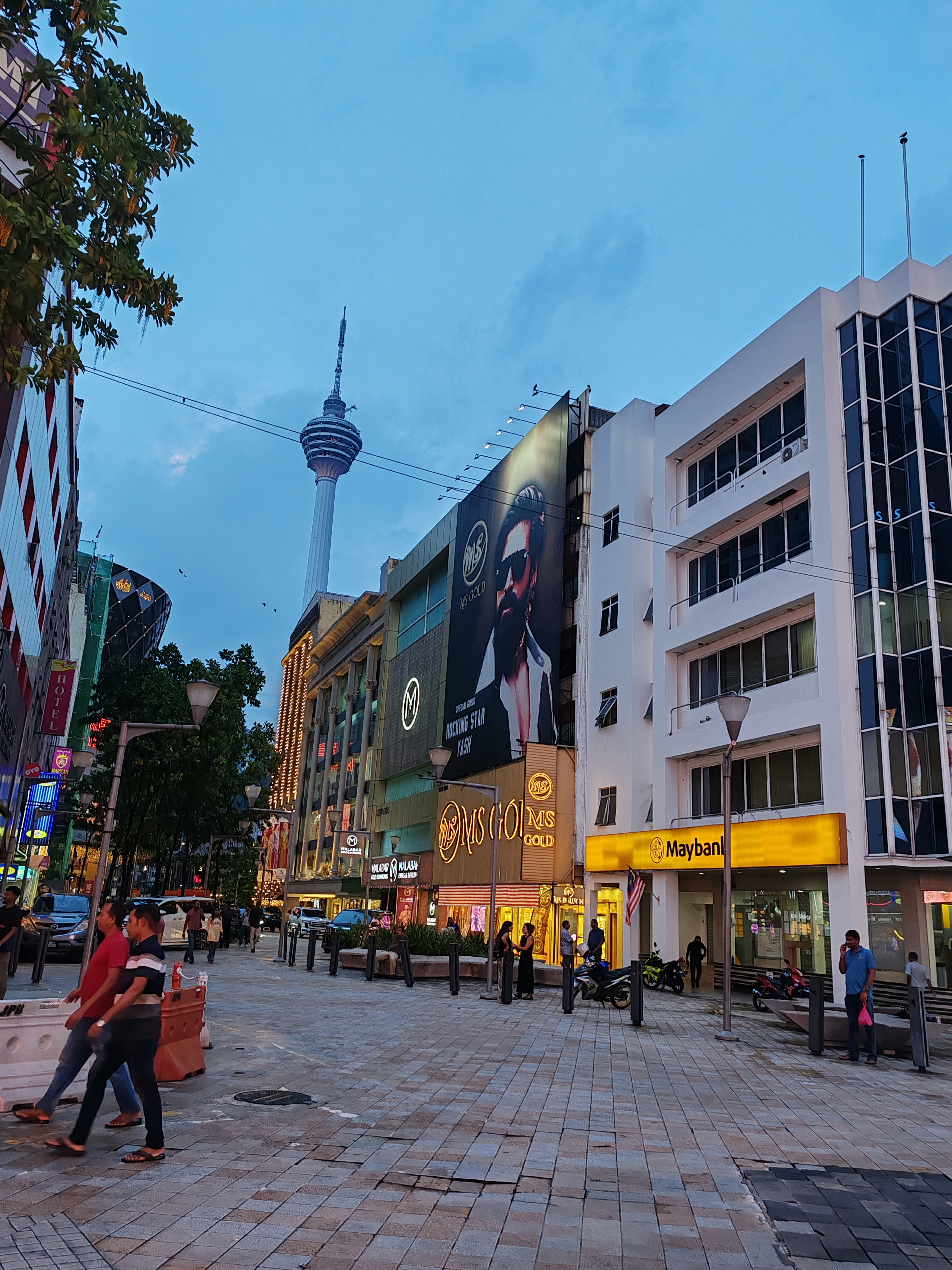
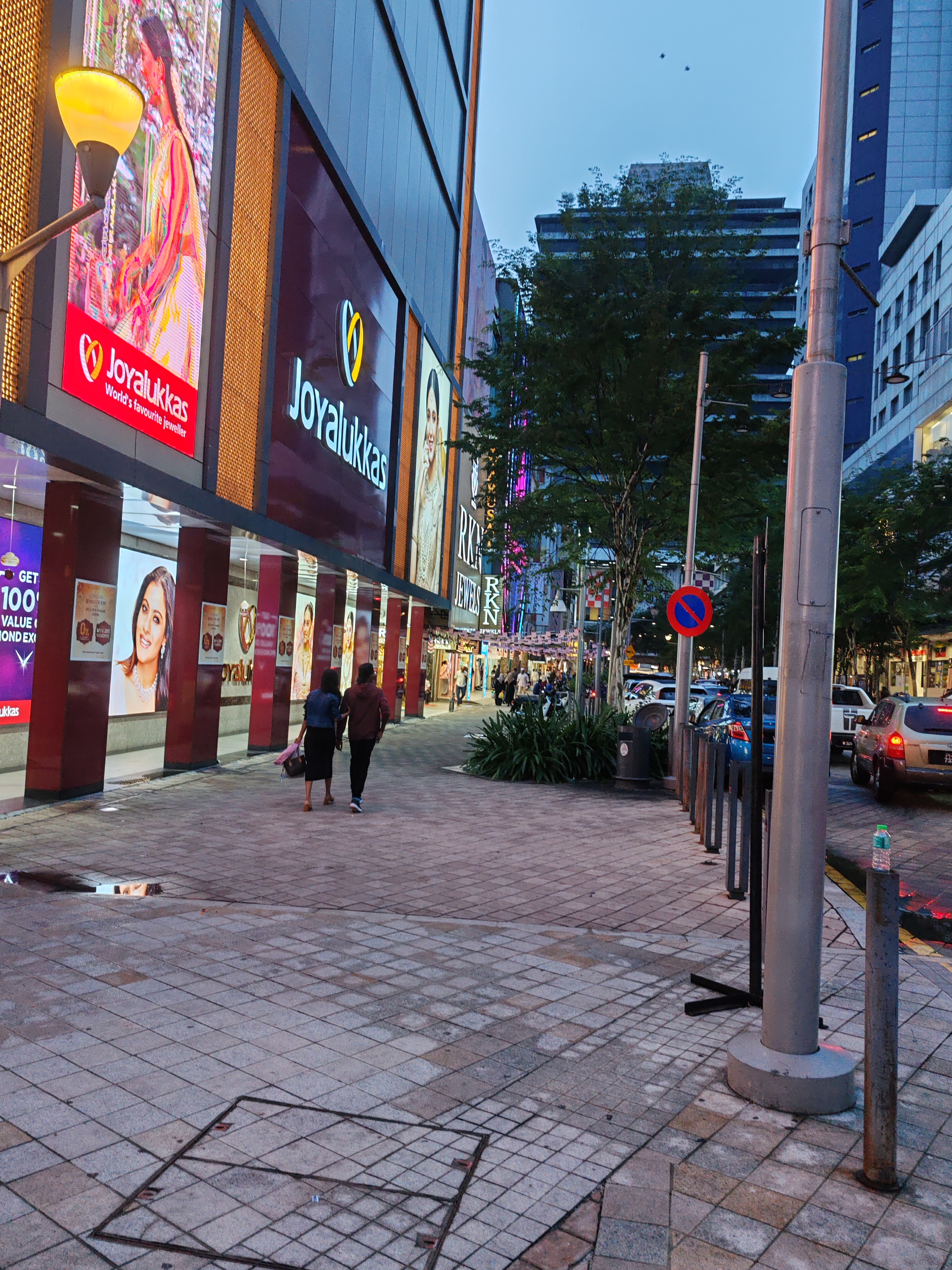
Discovering Kuala Lumpur's Neighborhoods
The next morning, I walked around the surrounding area.
What surprised me was that the streets felt much quieter than I expected.
Many shops were still closed, and the atmosphere was calm.
Compared with Bangkok's busy streets, Kuala Lumpur had a more relaxed rhythm.
I also noticed many textile shops and small businesses in the area.
This gave me the feeling that Kuala Lumpur's neighborhoods often have their own unique identities.
Some areas are modern business districts.
Others still maintain traditional local commercial characteristics.
This combination creates a very different urban experience from other Southeast Asian capitals.
Discovering Kuala Lumpur's History Through Street Art
While walking around Kuala Lumpur, I eventually reached the Petronas Twin Towers area.
After exploring the modern city center, I continued walking through smaller streets without a specific destination.
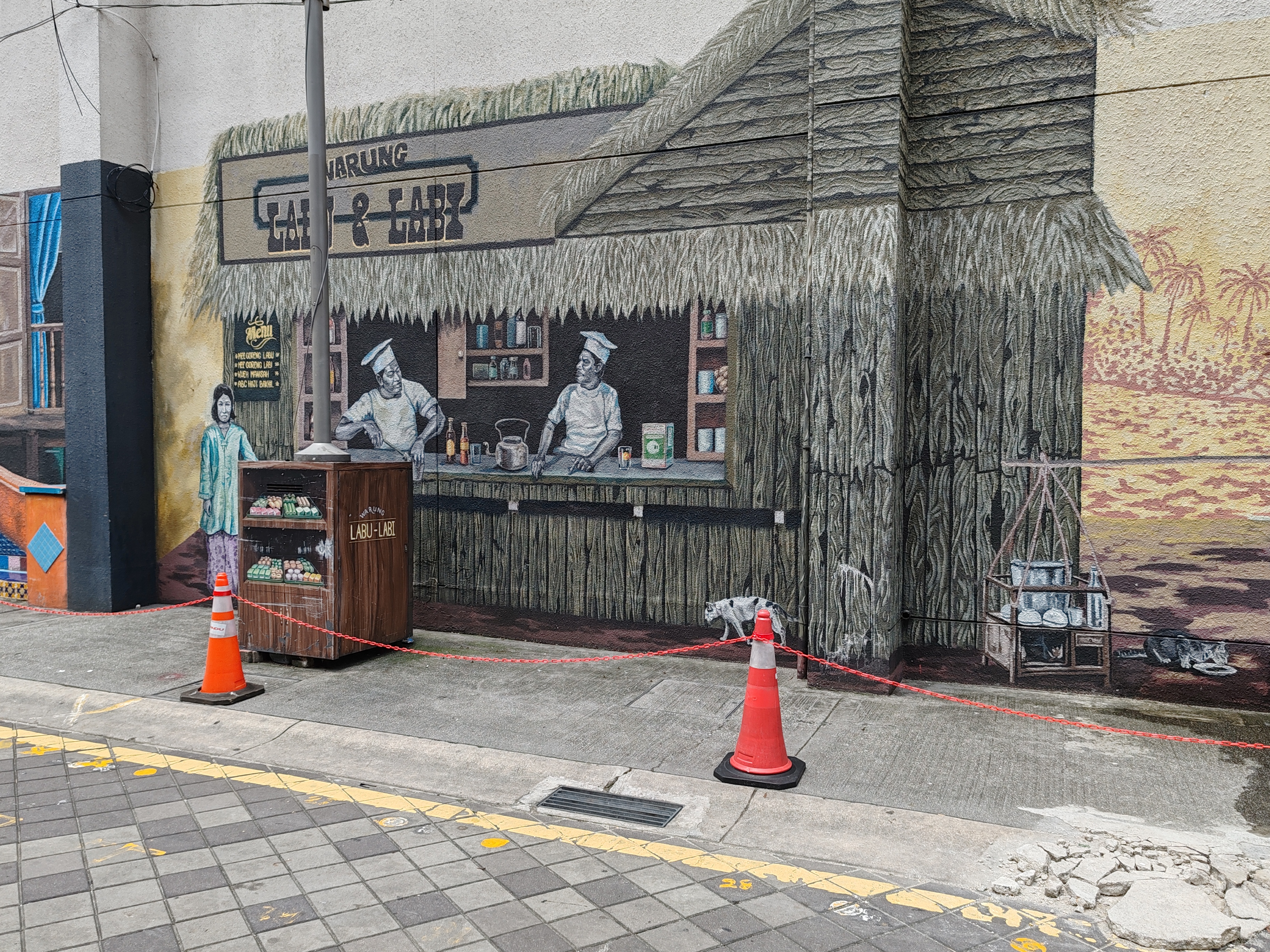
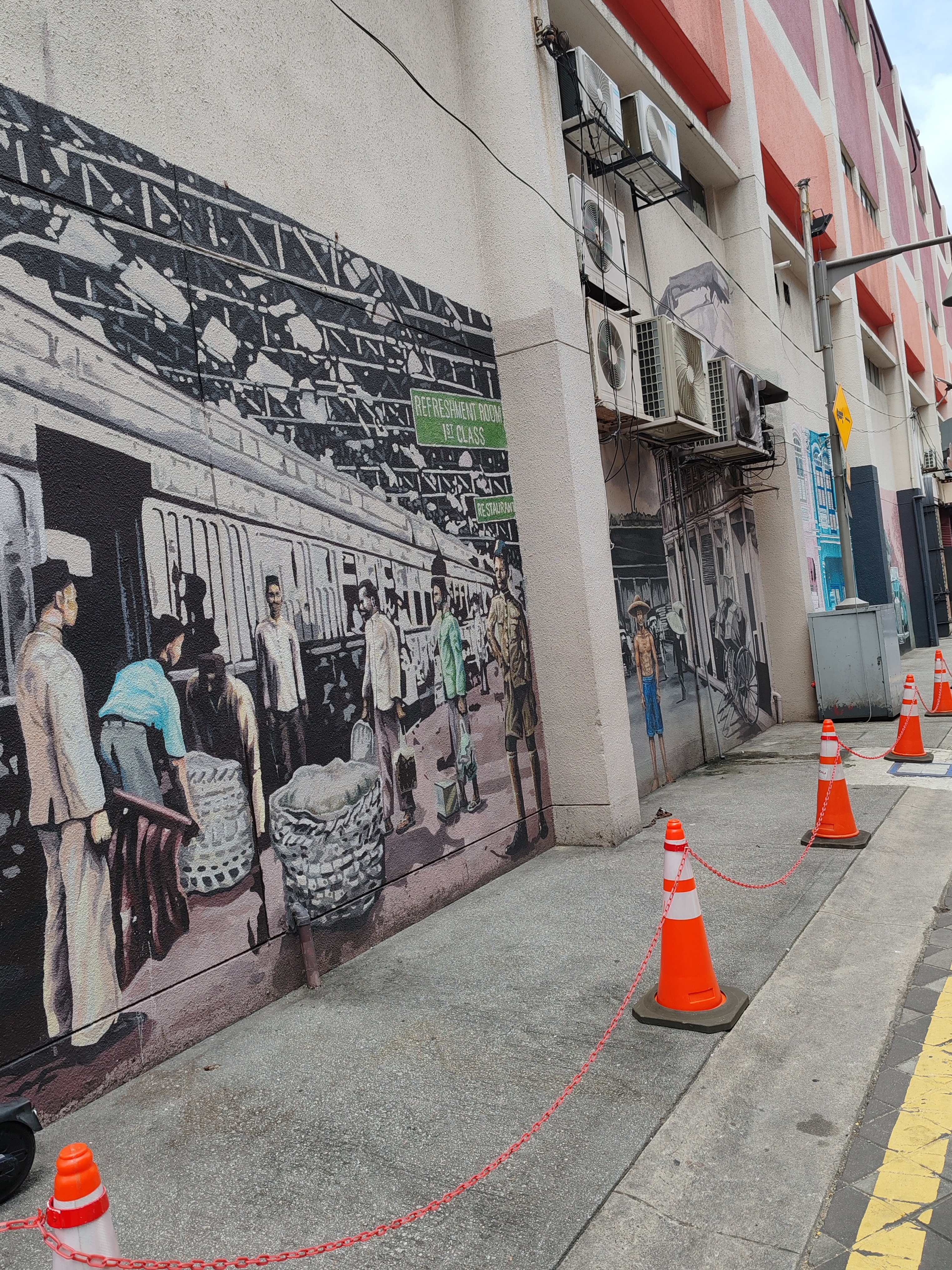
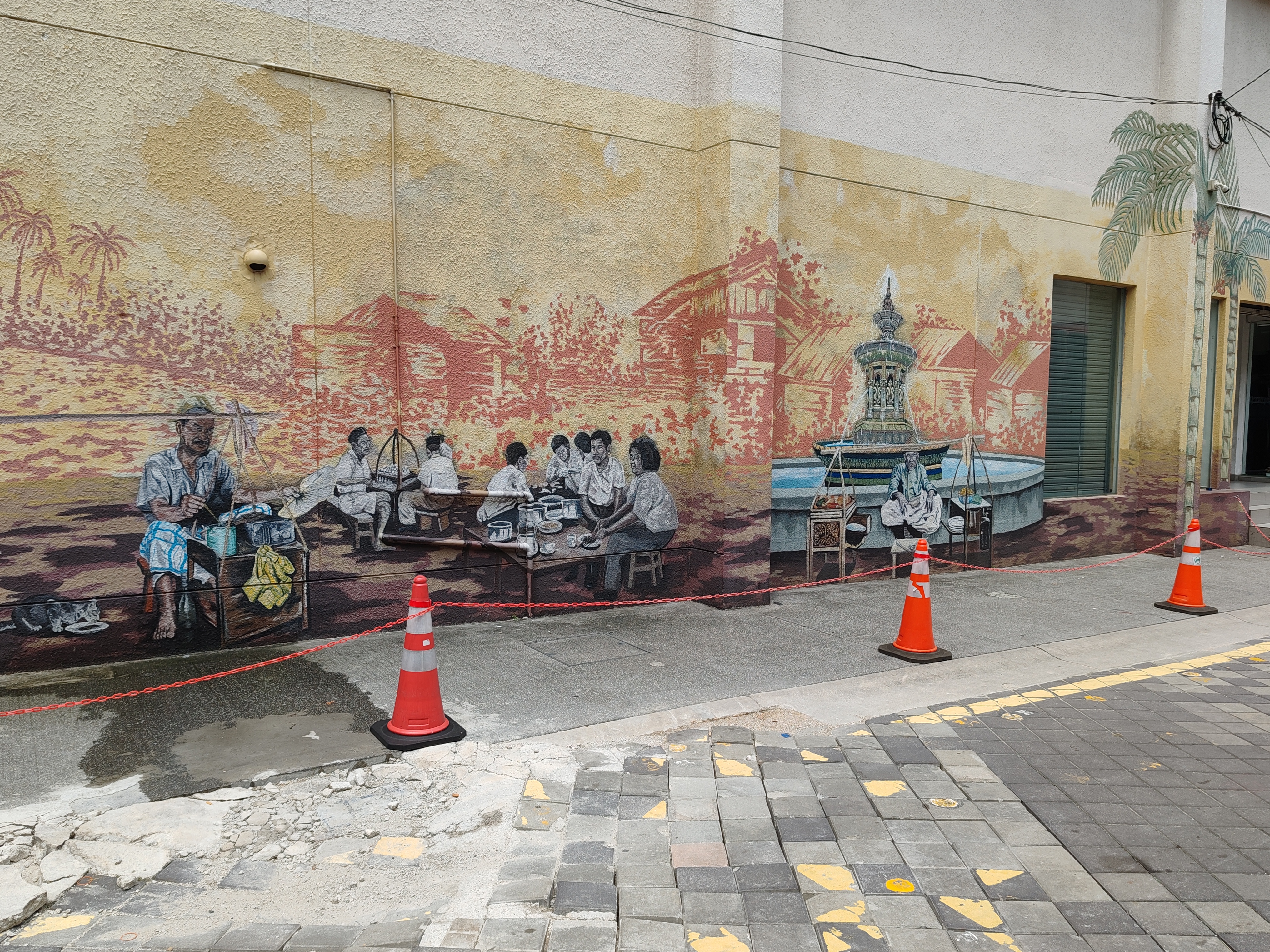
That was when I unexpectedly discovered several interesting wall paintings.
The murals immediately caught my attention.
They seemed to tell the story of Kuala Lumpur's past.
Looking at these paintings, I started imagining what this area might have looked like decades ago.
Before becoming a modern international city, Kuala Lumpur was shaped by:
- Small workshops
- Local businesses
- Traditional markets
- Natural resources and agriculture
The city developed gradually from these early communities into the modern metropolis we see today.
These murals created a connection between the past and the present.
They reminded me that behind every modern city, there is a long history of ordinary people building their lives.
Preserving History During Urban Development
One thing I appreciated about Kuala Lumpur was the effort to preserve parts of its historical character.
Many cities around the world develop rapidly and replace old neighborhoods completely.
However, keeping some historical elements allows people to remember how a city grew.
Modern buildings show economic development.
Historical streets show human stories.
Both are important.
For travelers, these small details are often more memorable than famous landmarks.
The Petronas Twin Towers are impressive, but these small streets and murals gave me a different understanding of Kuala Lumpur.
They showed me the city behind the postcard image.
Understanding Kuala Lumpur's Multicultural Neighborhoods
During my first few days in Kuala Lumpur, I was surprised because I did not see as many Chinese Malaysian faces as I expected.
Instead, many areas had strong Indian Malaysian and Malay cultural characteristics.
At first, this confused me.
I had always heard that Malaysia has a large Chinese-speaking population.
Later, I understood that Kuala Lumpur is not one single community.
It is a combination of many different neighborhoods.
Some areas are strongly connected with Malay culture.
Some areas have Indian Malaysian communities.
Other areas are famous for Chinese Malaysian businesses and restaurants.
The experience taught me an important lesson:
A country's cultural identity cannot always be understood from one neighborhood.
You need to explore different parts of the city.
Meeting a Malaysian Chinese Driver
On my way back to the airport, I used a different transportation option instead of Grab.
This time, I met a Malaysian Chinese driver.
From our conversation, I learned more about the local Chinese Malaysian community.
He explained that the area where I stayed was mainly an Indian Malaysian community area, which was why I did not see many Chinese restaurants or Chinese residents nearby.
He also told me that if I wanted to experience Chinese Malaysian food and culture, I should visit other neighborhoods where Chinese communities are more concentrated.
Suddenly, my previous confusion disappeared.
The city was not missing anything.
I was simply looking in the wrong area.
Conversations With Local People Teach You More Than Maps
During the drive, we talked about many topics:
- Malaysian Chinese history
- Local culture
- Interesting places to visit
- Different parts of Malaysia
This was one of the most valuable moments of the trip.
Travel websites can tell you where places are.
Maps can show you locations.
But conversations with local people often explain why a place became what it is today.
For me, this is one of the biggest differences between being a tourist and actually experiencing a country.
The Malaysian Chinese Experience
During my years traveling and living in Southeast Asia, I have met many overseas Chinese communities.
The Malaysian Chinese community left a particularly strong impression on me.
Many Malaysian Chinese families have lived in the region for generations.
They have built their lives while maintaining connections with:
- Chinese language
- Traditional culture
- Family values
- Local Malaysian society
What impressed me most was their ability to balance different identities.
They are Malaysian citizens, but many still preserve Chinese cultural traditions.
This combination creates a unique Southeast Asian Chinese experience that is different from anywhere else.
A Different Perspective on Overseas Life
Living abroad changes the way you see the world.
Before visiting Malaysia, I had certain expectations based on what I had heard from others.
But real experience is always more complicated.
A city cannot be understood through stereotypes.
You need to:
- Walk through local streets
- Talk with residents
- Experience ordinary daily life
- Observe how different communities interact
Only then can you begin to understand a place.
My first impression of Kuala Lumpur changed several times during the trip.
At first, I was confused.
Later, I became curious.
Finally, I started appreciating the complexity of this city.
Kuala Lumpur as a Long-Term Living Destination
After experiencing Kuala Lumpur, I understood why many foreigners choose Malaysia as a long-term base.
The city has many advantages:
- Good international connections
- Multicultural environment
- Modern infrastructure
- Comfortable housing options
- English-friendly communication
- Diverse food choices
Compared with some other Southeast Asian capitals, Kuala Lumpur feels less crowded and less intense.
The city has modern facilities, but the overall rhythm of life is still relatively relaxed.
For digital nomads, remote workers, and foreigners looking for a balanced lifestyle, Kuala Lumpur is an interesting option.
Malaysia Compared With Thailand and the Philippines
After living in different Southeast Asian countries, I feel each place has its own personality.
Thailand, especially Bangkok, is extremely convenient.
It has:
- Excellent convenience stores
- Strong transportation networks
- A mature foreigner ecosystem
- A lively street culture
The Philippines has:
- Beautiful islands
- English communication
- Strong social connections
- A more adventurous feeling
Malaysia, especially Kuala Lumpur, feels different.
It combines:
- Southeast Asian lifestyle
- Modern urban development
- Multicultural society
- A relatively comfortable living environment
For people who want a quieter and more organized city experience, Kuala Lumpur can be very attractive.
Returning to Bangkok
After finishing my short trip, it was time to return.
The journey back to the airport was smooth.
There was no heavy traffic, and the weather was much better compared with the day I arrived.
After checking in and passing through the airport procedures, everything went smoothly.
A few hours later, I arrived back in Bangkok.
Although the trip was short, Kuala Lumpur left a strong impression on me.
Final Thoughts
My first visit to Kuala Lumpur was full of unexpected discoveries.
Before arriving, I had imagined one version of Malaysia.
After walking through its streets, talking with local people, and experiencing daily life, I discovered something much more complicated and interesting.
Kuala Lumpur is not just:
- The Petronas Twin Towers
- Modern shopping malls
- Business districts
It is also:
- Old neighborhoods
- Multicultural communities
- Historical memories
- Generations of families building their lives
The biggest lesson from this trip was simple:
A country is never just what you expect.
The real character of a place appears when you slow down and observe everyday life.
For me, Kuala Lumpur represents one of the most interesting examples of Southeast Asia's diversity.
It is a city where different cultures, histories, and communities continue to exist together.
That is what makes Malaysia special.
Explore More
› My Favorite Android Phones: Why Pixel and Nothing Represent the True Android Experience
› My Favorite Linux Distributions: RHEL, AlmaLinux, and Fedora from a Developer's Perspective
› My Open Source Project: pwa Development Notes
› Chinese Tea Culture vs Thai Tea Culture: A Journey Through Tradition, Taste, and Daily Life
› My First Night Market in Bangkok: A Night That Changed My First Impression of Thailand
› My Experience Living in the Philippines: Beyond Manila, Davao, and the Reality of Daily Life
› Why I'll Never Buy an Airport SIM Card Again: My eSIM Journey Across Southeast Asia