Why Chinese Chefs Struggle to Cook Authentic Chinese Food Abroad
Many Chinese chefs simply cannot reproduce the same quality of food overseas.
Many people who travel or live abroad, or eat at Chinese restaurants overseas, share a common question: Why is it that authentic Chinese people can cook such delicious food back home, but once they move abroad, the taste of their Chinese dishes seems to change completely? Some people even jump straight to the conclusion that "Chinese chefs working overseas simply aren't skilled enough."
But is that really the truth?
I have traveled extensively throughout Southeast Asia. I have lived in Thailand and the Philippines, eaten at all kinds of Chinese restaurants run by local Chinese communities and Chinese chefs, and even tried cooking for myself there. I understand this situation very clearly: it is not that their cooking skills have deteriorated. The real problem is that once you leave China's environment, producing authentic Chinese food becomes extremely difficult.
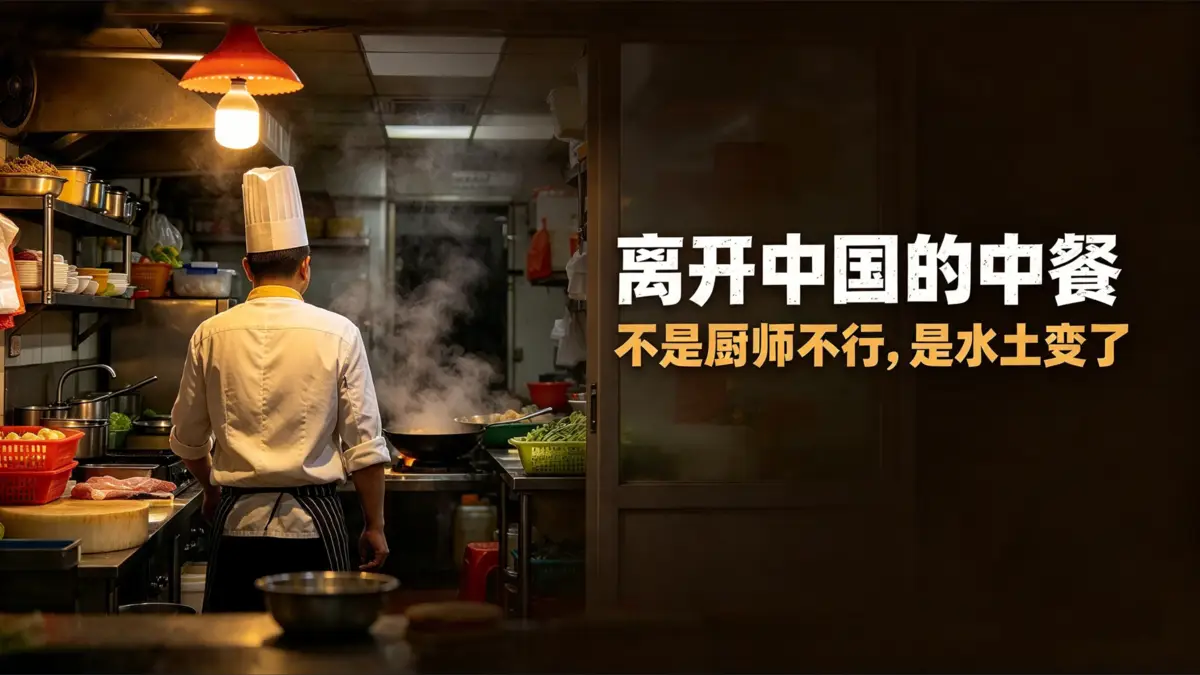
Sometimes, it really is a case of even the most skilled cook being unable to prepare a meal without the right ingredients.
From ingredients and kitchen equipment to the surrounding environment and food culture, let's explain why Chinese cuisine seems to lose that final touch whenever it crosses China's borders.
1. Ingredients: The Foundation of Chinese Cuisine Changes Completely Overseas
Chinese cooking places great importance on ingredients. The foundation of a dish's flavor is already determined the moment you start buying groceries.
Back home in China, we take these things for granted. Only after moving abroad do you realize that being able to buy fresh, diverse, and affordable ingredients whenever you want is actually a blessing.
🥬 Vegetables: Very Limited Selection and Expensive Prices
In China, we have long enjoyed what could be called complete vegetable freedom.
Walk into a vegetable market early in the morning, and you will find dozens of varieties of fresh greens on display: Chinese lettuce, choy sum, Chinese kale, bok choy, spinach, water spinach, lotus root, water bamboo, Chinese yam, and many more.
You can find almost anything you want. For just a few yuan, you can bring home a large bag of vegetables. Whether stir-fried, blanched, or cooked in soup, they all taste delicious.
But things are completely different in Southeast Asia.
The vegetables commonly available locally are limited to just a few varieties: cabbage, onions, potatoes, green beans, and a small amount of water spinach.
Many vegetables commonly used in Chinese cooking, such as choy sum, lettuce, celtuce, lotus root, water bamboo, and winter bamboo shoots, are simply not produced locally. They have to be imported, often by air.
What does air freight mean? Apart from prices several times higher, the vegetables may spend several days in transit. By the time they reach your hands, they are already far from fresh. The leaves turn yellow and wilt, and the texture deteriorates significantly.
An ordinary bunch of choy sum can cost more than RMB 10, while a small bunch of lettuce may cost RMB 7–8. How can an ordinary household afford to eat these vegetables every day?
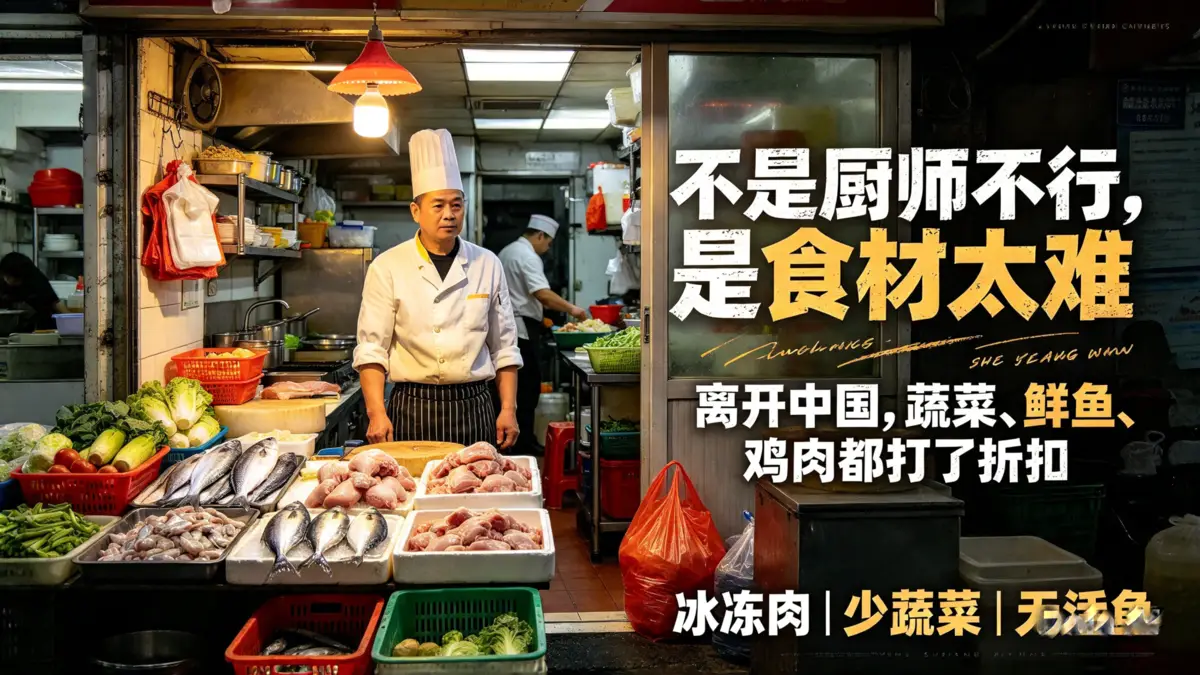
Sometimes, preparing a simple plate of stir-fried vegetables costs more than eating meat.
Without suitable ingredients, many dishes cannot even get started.
Want to stir-fry some Chinese lettuce? You cannot find it.
Want to make pork rib soup with lotus root? Lotus root is so expensive that it hurts your wallet.
Want to prepare a cold celtuce salad? You cannot even find fresh celtuce.
No matter how skilled a chef is, without the right ingredients, there is very little they can do.
🐟 Fish: Without Live Fresh Fish, Frozen Sea Fish Cannot Deliver the Same Freshness
Fish dishes account for a huge part of Chinese cuisine.
Steamed sea bass, braised crucian carp, Sichuan-style pickled fish, crucian carp soup, and many others all depend on one essential quality: freshness.
The fish should ideally be freshly killed and cooked immediately. The flesh should be tender yet firm, hold together during cooking, and produce a rich, milky-white soup when simmered.
What about Southeast Asia?
Although the region is surrounded by the sea and has plenty of marine fish, freshwater fish are relatively limited in many markets, and prices can be high.
Most of the fish available in local markets are frozen marine fish. Nobody can tell exactly how long they have been frozen.
After thawing, blood and fishy odors come pouring out. The flesh becomes soft, loose, and mushy, breaking apart easily with just a light touch.
Imagine trying to make traditional Chinese steamed fish with this kind of ingredient.
The moment you pick up a piece with your chopsticks, the flesh falls apart on the plate. No matter how you steam it, that strong fishy smell remains. Forget about the natural sweetness and freshness.
Want to simmer a pot of rich, milky-white crucian carp soup? There is no crucian carp available. If you use marine fish instead, the flesh falls apart during cooking, and the soup remains thin and bland, with a persistent fishy smell.
It is not that the chef does not want to prepare good fish. The problem is that there simply isn't suitable fish available.
🍗 Meat: Frozen Meat Dominates the Market, with Strong Odors and Poor Texture
In China, most pork and chicken sold in markets are relatively fresh, often slaughtered and supplied locally. The meat has a firm texture and natural elasticity.
For example, traditional poached chicken has smooth skin and tender meat, with a subtle natural sweetness. Fresh pork, when stir-fried, remains juicy and tender, with its own rich meaty aroma.
Southeast Asia has a hot climate, and cold-chain infrastructure is not always as developed. Much of the poultry circulating in local markets consists of imported frozen products.
Chicken may go through slaughtering, freezing, sea transportation, and storage in local warehouses. It can spend one or two months in this process, sometimes even three or four months.
Once thawed, large amounts of blood and water flow out. The meat becomes soft and waterlogged. After cooking, it turns dry, tough, and crumbly, with very little elasticity.
Want to make classic Chinese poached chicken?
That is almost a luxury.
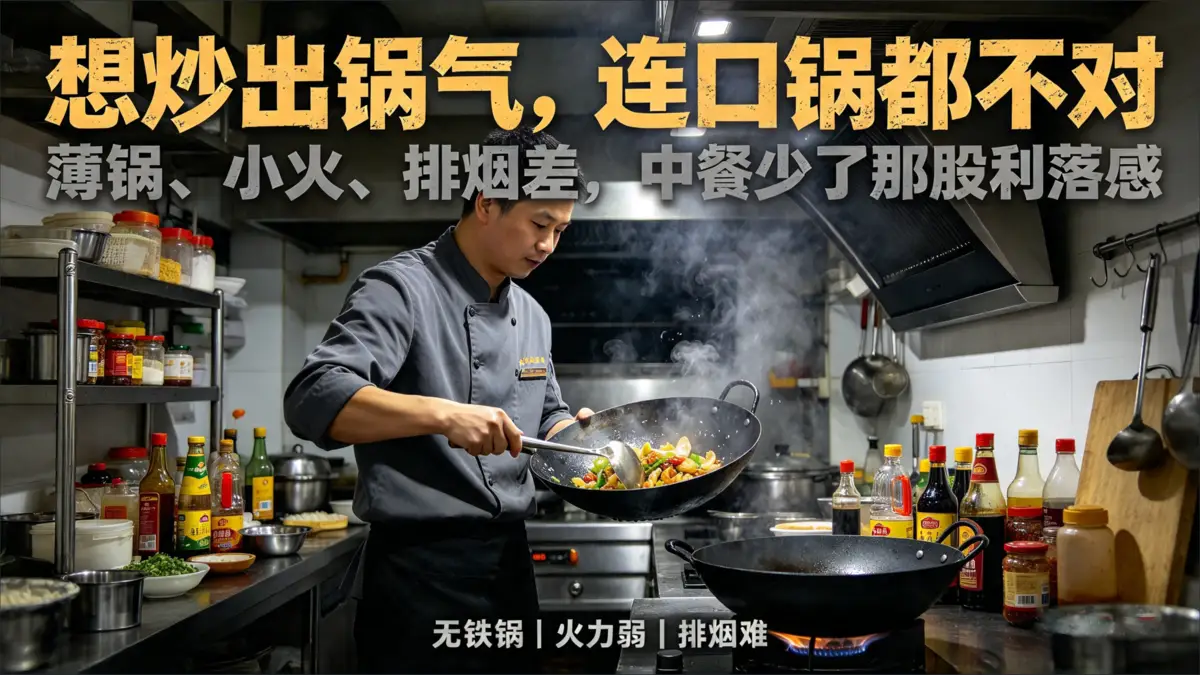
After boiling frozen chicken, the skin becomes soft, the meat loses its firmness, and the texture turns cottony. It has none of the firm, springy bite that good poached chicken should have. There is also a persistent unpleasant poultry smell.
You can use ginger slices, cooking wine, and plenty of ginger and scallions, but these can only reduce the odor slightly. They cannot completely eliminate it.
Pork is much the same. It often has less fat and a stronger smell. Once stir-fried, it becomes dry and tough, without enough natural richness from the fat.
Many ordinary home-style Chinese dishes simply do not taste right when prepared overseas. The fundamental problem lies in the ingredients themselves.
🧈 Tofu: That Familiar Tender Texture Is Almost Impossible to Find Overseas
When it comes to tofu, I have a lot to say!
Chinese tofu is truly exceptional.
Soft tofu is smooth and delicate without falling apart, with a clean soybean aroma. Firm tofu has a dense, elastic texture that holds together when fried and absorbs flavors beautifully when braised.
There are also gypsum-set tofu, brine-set tofu, thousand-layer tofu, dried tofu, and many other varieties.
The selection is extensive, the textures are excellent, the soybean flavor is rich, and the prices are affordable. For just a few yuan, you can buy a large package and prepare it in countless ways.
After spending so much time in Thailand and the Philippines, one of the things I miss most is the tofu back home in China.
Tofu in Southeast Asia often has a strong sour smell. Whether you buy it from a small street shop or a Chinese supermarket, opening the package releases a sharp sour odor that goes straight up your nose.
The texture is also strange.
Some varieties are so soft that they resemble pudding and fall apart at the slightest touch. Others are extremely hard and dry, with none of the delicate yet firm texture that good Chinese tofu should have.
Want to make a plate of classic mapo tofu?
The tofu falls apart as soon as it enters the wok. The sour taste mixes with the chili and spices, creating an unpleasant combination that is difficult to eat.
It is nothing like the authentic combination of spicy, numbing, savory flavors and delicate tofu that remains intact.
Some people might ask whether Japanese or Korean tofu is any better.
Honestly, I have tried both, and neither really works.
Japanese tofu is extremely smooth and tender, more like steamed egg custard, without enough firmness. It easily breaks apart during cooking.
Korean tofu is somewhat firmer, but its soybean flavor is relatively mild and its texture is still soft. Simmer it for too long, and it falls apart. It cannot reproduce the characteristic texture of Chinese tofu, which absorbs plenty of broth while still maintaining its shape.
The portions are also small, while the prices are ridiculously high. A small piece can cost RMB 7–8, enough to buy a large package of tofu back home.
I am not being overly picky. Once you have experienced good tofu, the difference becomes obvious.
Tofu may look simple, but its quality depends heavily on water quality, soybean quality, and the craftsmanship involved in coagulation. Even small differences in these details can produce completely different results.
That simple, everyday tofu dish has genuinely become a luxury overseas.
Poor ingredients, limited varieties, high prices, and unreliable freshness: this is the reality that Chinese restaurants overseas face every day.
It is not that chefs do not want to use better ingredients. They simply have very limited choices, while costs remain high. No matter how good their skills are, they cannot magically create ingredients out of thin air.
2. Kitchen Equipment and Cooking Environment: You Want to Stir-Fry, but You Cannot Even Find a Proper Wok
Apart from ingredients, two things are essential to the soul of Chinese cooking: a good iron wok and a powerful flame.
These are not merely preferences. They are the foundations of a culinary tradition developed over thousands of years.
Our ancestors had already developed stir-frying techniques during the Song Dynasty. Over more than a thousand years, iron woks were repeatedly improved in terms of material, thickness, and shape to accommodate virtually every aspect of Chinese cooking.
The traditional wok has a rounded bottom that concentrates heat, while its relatively thick walls retain heat effectively.
When exposed to a powerful flame, the oil temperature rises quickly. As soon as the ingredients hit the hot oil with that familiar sizzling sound, rapid stir-frying seals in moisture and instantly releases the natural aromas and flavors.
This is what Chinese cooks call *wok hei*.
The finished dishes are dry and crisp rather than watery, with bright colors and layers of flavor.
But when you arrive in Southeast Asia, finding a proper Chinese-style wok can be surprisingly difficult.
Traditional local cooking methods generally focus on boiling and grilling. The cookware commonly used consists of flat-bottomed pans, clay pots, and shallow frying pans.
Even when you finally find something advertised as a wok, it is often made from thin sheet metal with a flat bottom.
Once heated, the bottom becomes extremely hot while the sides remain relatively cool. The oil temperature never reaches the level required for proper stir-frying.
Whatever you cook ends up looking more like food being steamed or braised inside a pan. The ingredients become soft and watery, without any wok hei or the dry, crisp texture expected from authentic Chinese stir-frying.
Even more frustrating are ventilation systems and restrictions on cooking appliances.
Chinese cooking involves frying, stir-frying, deep-frying, and other techniques that naturally produce large amounts of smoke and oil fumes.
In China, most home kitchens are equipped with range hoods. Once switched on, they can remove much of the smoke and cooking fumes.
However, many apartments and residential buildings in Southeast Asia are simply not designed for this kind of cooking.
Building management may not allow residents to install powerful range hoods. You might just have heated the oil when the fire alarm goes off.
The smoke cannot escape, and neighbors may think the building is on fire and come knocking on your door to complain.
Open flames are also restricted in some places. Certain apartments do not even allow gas stoves, leaving residents with only electric or induction cookers.
Their heat output can be relatively weak and inconsistent, making it almost impossible to reach the high temperatures needed for authentic Chinese stir-frying.
Without a proper wok, a sufficiently powerful flame, or adequate ventilation, the kitchen simply does not support this style of cooking.
It is not that the chef does not want to stir-fry. The kitchen itself makes it impossible.
Slow cooking over low heat certainly has its merits, but a huge proportion of Chinese dishes depend on high-temperature stir-frying. Without it, the difference in flavor can be enormous.
3. Cultural Environment: The Entire Surrounding Environment Lacks the Same Concept of Cooking
The deeper differences actually lie in things that are less visible: food culture and everyday habits.
Chinese culinary culture has developed through thousands of years of accumulated experience.
From ingredient preparation, knife skills, and heat control to seasoning combinations, seasonal ingredients, and different cooking techniques for different dishes, China has developed an enormous and highly sophisticated culinary system.
We emphasize the balance of five flavors. We know how to remove unpleasant odors and enhance natural freshness. We understand how to use scallions, ginger, and garlic, when to add spices, and how different ingredients require different cooking temperatures.
This is not simply the skill of an individual chef.
It is knowledge accumulated, passed down, and refined by generations of people through everyday life. Eventually, it becomes deeply embedded in people's understanding of food.
In many parts of Southeast Asia, traditional food cultures are relatively different and often rely on simpler cooking methods.
The climate is hot and humid throughout much of the year, making food spoil more easily. Combined with historical limitations in resources, these conditions have helped shape food habits centered around boiling, grilling, and eating raw ingredients with dipping sauces.
The basic idea is to cook the food and make it edible. Seasoning often relies on salt, fish sauce, lime juice, and chili.
These methods are convenient and practical, without necessarily involving the same level of attention to heat control, enhancing freshness, and developing complex aromas.
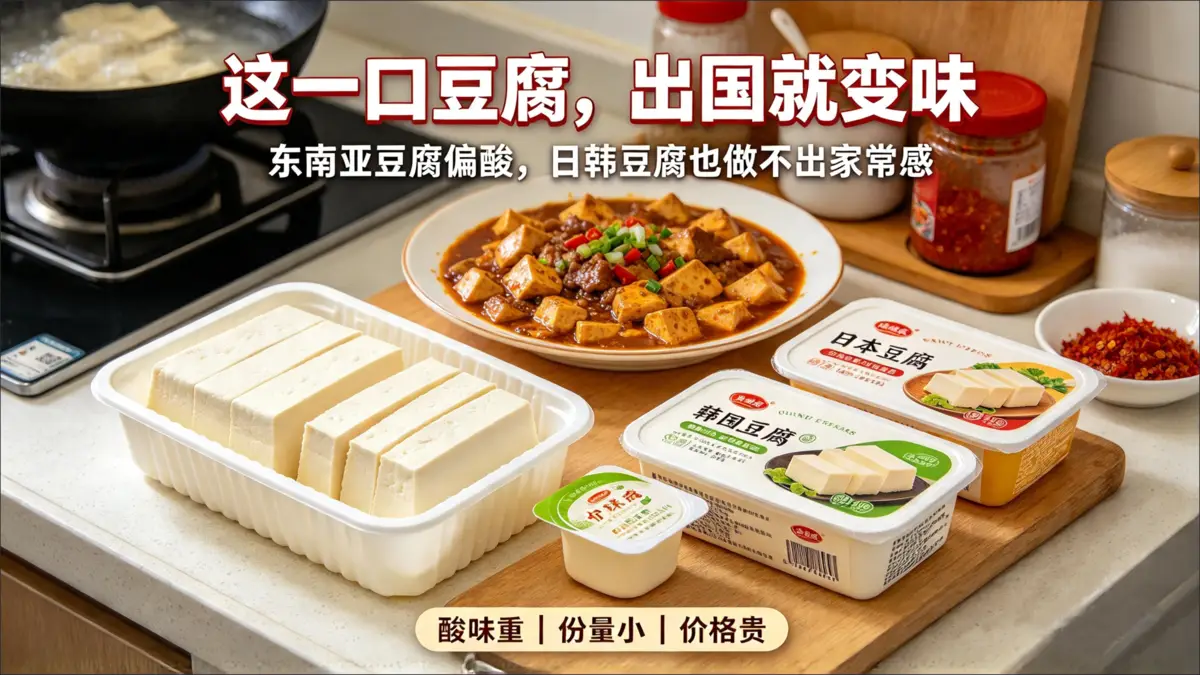
This is not about one culture being better or worse than another. These differences have been shaped by different living environments.
But when you try to maintain a Chinese way of eating in such an environment, you quickly discover that almost everything feels out of place.
You want to visit the market early in the morning to select fresh vegetables, but local vendors may already be closing their stalls after 10 a.m.
You want to simmer a pot of bone broth for hours, but your neighbors find the strong smell overwhelming.
You prepare the ingredients, chop the vegetables, heat the oil, fry the aromatics, and carefully arrange everything on the plate. To local people, the entire process may look like some complicated engineering project.
Without a complete supply chain, a supporting market system, or the same culinary preferences, no matter how hard one person tries, it is impossible to sustain an entire food culture alone.
Over time, this sense of helplessness becomes exhausting.
You are not simply preparing a meal. You are fighting alone to maintain a particular way of life in an entirely different environment.
You cannot find the ingredients, so you have to ask someone to buy them for you.
You lack the right equipment, so you have to improvise.
The cooking produces too much smoke, so you have to be extremely careful.
The costs are too high, so you have to calculate everything repeatedly.
Every additional step becomes another unnecessary complication.
4. The Real Truth: It Is Not That the Chefs Are Bad, but That the Environment Is Different
I know several chefs who run Chinese restaurants in Southeast Asia. Back in China, they were among the best in their profession.
When we talk about the taste of their dishes, they are more particular about quality than anyone else, but they are also more helpless than anyone else.
"What can I do? Of course I want to buy a live fish and steam it fresh, but the entire market only has a few frozen fish available.
"I want to serve you a plate of tender tofu, but there is no tofu here that isn't sour.
"I want to stir-fry everything over a powerful flame and bring out that authentic wok hei, but the landlord says the ventilation system cannot handle it. I can only cook slowly over low heat.
"I want you to experience the exact same flavors you remember from home more than anyone else. But these are the ingredients I have, and these are the conditions I have to work with. All I can do is my best."
Those words probably provide the most honest answer.
Every authentic Chinese meal we enjoy is never the achievement of the chef alone.
Behind it lies a vast landscape capable of producing fresh vegetables throughout the seasons, countless vegetable markets and cold-chain logistics networks across cities and villages, well-developed aquaculture that makes freshwater fish affordable and delicious, cooking equipment and culinary wisdom passed down over thousands of years, readily available soybeans and clean water, and an entire lifestyle and cultural environment built around the idea of enjoying good food.
All these things work together to make those familiar flavors seem completely natural.
Once you leave China, much of this support disappears.
The quality of ingredients declines, the selection becomes limited, prices multiply, cooking equipment becomes inconvenient, the environment no longer supports traditional methods, and the surrounding culture does not share the same culinary expectations.
Both costs and difficulties increase dramatically.
The chefs have not changed. Their skills have not changed. Their dedication has not changed.
What has changed is the land beneath their feet. It is no longer the same environment they had back home.
So the next time you eat Chinese food overseas and find that it is not quite perfect, do not immediately shake your head and say that the food tastes bad.
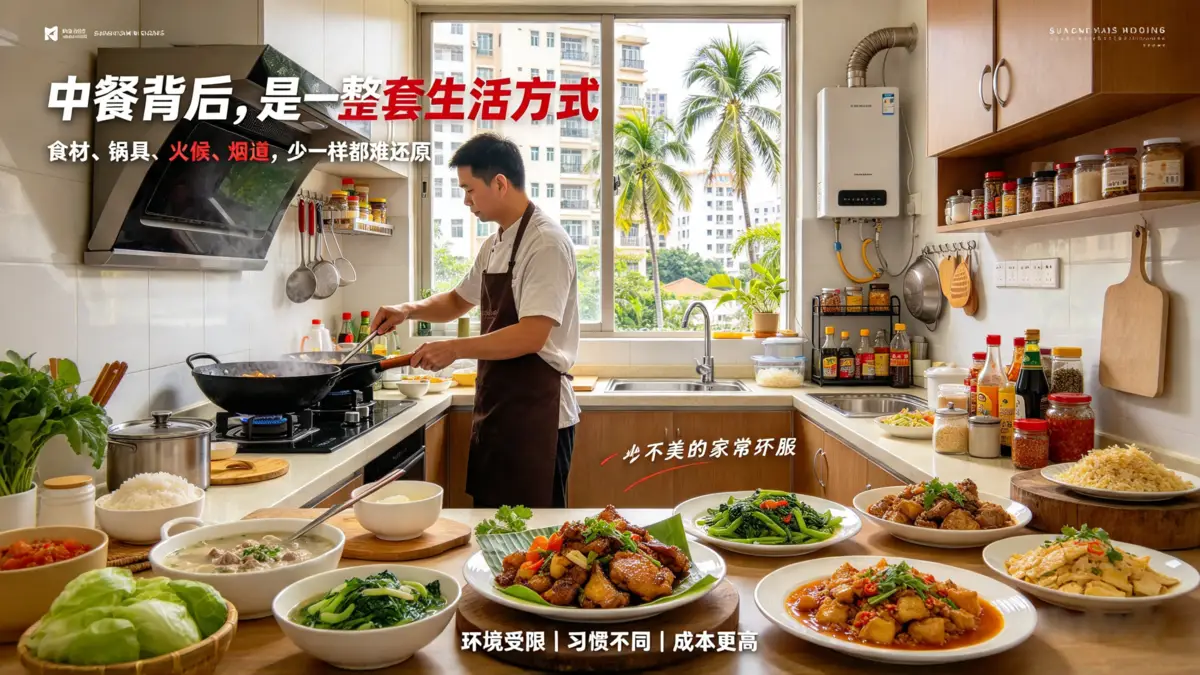
Before that plate reaches your table, the chef may have visited several markets just to gather enough ingredients.
He may have spent several times as much effort preparing everything with substitute equipment, working within restricted cooking temperatures and cramped kitchen spaces, all while trying his best to recreate the flavors he remembers from home.
What you are eating is not simply "failed Chinese food."
It is a small piece of someone's hometown that an overseas chef has struggled to preserve despite countless limitations.
The most precious flavors in this world have never been about one person's cooking skills alone.
They come from the complete natural and cultural environment behind them: the land that can grow hundreds of varieties of vegetables, raise fresh fish and shrimp, produce tender white tofu, and sustain thousands of years of cooking traditions.
What we take for granted as an ordinary part of everyday life is actually something that many places can only wish for.
And that is precisely why we should cherish that land, that familiar tofu, that bowl of fresh fish soup, that plate of vegetables filled with wok hei, and the taste of home that remains there no matter how far we travel.
Explore More
› How to Optimize IBus Chinese Input on Linux: A Practical Configuration Guide
› Fellow Countrymen or Traps? The Deadly Cycle of Mutual Harm in Chinese Communities Around the World