China Beyond the Headlines: Geography, Culture, and Everyday Life
Many people outside China imagine the country as a single culture with one language, one cuisine, and one way of life.
After spending years traveling across different parts of China and later living in several Southeast Asian countries, I gradually realized how incomplete that picture is.
China is enormous. Mountains, deserts, plains, coastlines, tropical forests, and high plateaus all exist within one country. These landscapes have shaped different lifestyles, traditions, cuisines, business cultures, and ways of thinking over many centuries.
In my experience, understanding China becomes much easier when we stop treating it as a single story and start seeing it as a collection of diverse regions connected by a long shared history.
This article is not intended to be a history lesson. Instead, it is a personal reflection based on travel, overseas life, and conversations with people from different parts of China and Southeast Asia.
Geography Shapes Culture
One of the easiest ways to understand China's diversity is through geography.
Northern China has long, cold winters and vast plains.
Southern China is warmer, greener, and receives much more rainfall.
The western regions include mountains and plateaus, while the eastern coast has historically connected China with international trade.
These differences influenced agriculture, architecture, transportation, local cuisine, and even daily habits.
Rather than making one region "better" than another, geography simply encouraged different ways of living.
Why So Many Overseas Chinese Come from Southern China
One question I often hear while living in Southeast Asia is:
"Why do so many overseas Chinese families have roots in Guangdong or Fujian?"
History provides much of the answer.
For centuries, southern China's coastal provinces maintained close maritime connections with Southeast Asia.
Limited farmland, growing populations, and expanding trade encouraged many families to seek opportunities overseas.
Communities gradually formed across Thailand, Malaysia, Singapore, Indonesia, and the Philippines.
Over generations, these communities preserved many Chinese traditions while also embracing local cultures, creating unique identities that continue today.
China Is Better Understood as Many Regions, Not One Story
When people say "China," they often imagine a single culture.
In reality, traveling across China can sometimes feel like traveling through several different countries connected by one long history.
The food changes.
The climate changes.
The local dialects change.
Even daily routines, architecture, business culture, and family traditions can be surprisingly different.
This diversity is one of the most fascinating aspects of China.
For travelers, it also explains why visiting only one city can never represent the entire country.
Climate Shapes the Way People Eat
One of the easiest ways to understand regional differences is through food.
Climate has always influenced agriculture, and agriculture has influenced cuisine.
Northern China, with its colder winters and relatively dry climate, developed a food culture centered around wheat.
Noodles, dumplings, steamed buns, and pancakes became everyday staples.
Southern China, blessed with abundant rainfall and fertile river systems, gradually developed a rice-based diet.
Rice, fresh vegetables, seafood, tropical fruits, and lighter cooking methods became much more common.
Neither style is better than the other.
They simply reflect centuries of adaptation to different natural environments.
As someone who has lived in both China and Southeast Asia, I have become even more aware of how closely food is connected to geography rather than personal preference.
Coastal Provinces Developed a Different Perspective
China's eastern and southern coastlines have connected the country with the outside world for hundreds of years.
Ports in Guangdong, Fujian, Zhejiang, and other coastal regions became gateways for international trade.
Merchants, sailors, translators, craftsmen, and immigrants constantly exchanged ideas with neighboring countries.
This long history helped create business-oriented communities that were often more familiar with international trade than inland regions.
Even today, many overseas Chinese families trace their ancestry back to these coastal provinces.
For generations, people crossed the South China Sea not because adventure sounded exciting, but because they hoped to build a better future for their families.
That history can still be seen throughout Southeast Asia today.
Chinese temples, traditional festivals, family-owned restaurants, and local Chinese communities continue to preserve memories of earlier generations while becoming an important part of their adopted countries.
Living Overseas Changed My Understanding of China
Ironically, I probably learned more about China after leaving China.
Living in places such as the Philippines, Thailand, and Malaysia allowed me to meet Chinese families whose grandparents had migrated decades ago.
Many still spoke Chinese dialects at home.
Others had fully integrated into local society while continuing to celebrate Lunar New Year, Mid-Autumn Festival, or traditional family gatherings.
Their experiences reminded me that Chinese culture is not confined by national borders.
Instead, it continues to evolve wherever Chinese communities settle and contribute to local society.
This overseas perspective also helped me appreciate the diversity that already exists inside China itself.
Instead of seeing regional differences as divisions, I began to see them as different branches of the same long historical journey.
Chinese Communities Across Southeast Asia
One of the most rewarding parts of living in Southeast Asia has been meeting overseas Chinese communities.
Whether in Bangkok, Kuala Lumpur, Penang, Singapore, or Manila, I often discovered familiar traditions in unexpected places.
Chinese temples stand beside Buddhist temples.
Traditional bakeries sell recipes that have been passed down through generations.
Family-owned restaurants preserve dishes that sometimes taste closer to old southern Chinese cooking than what is commonly found in modern cities.
Every community has developed its own identity.
Malaysia has the rich heritage of Peranakan culture, where Chinese and Malay traditions blended over centuries.
Thailand's Chinese community has become deeply integrated into Thai society while continuing to preserve many family customs.
Singapore reflects another unique combination of Chinese heritage and modern multiculturalism.
The Philippines also has a long-established Chinese community whose history stretches back hundreds of years.
Although these communities share similar ancestral roots, each has developed in different ways according to local history, language, and culture.
That diversity makes Southeast Asia an especially fascinating place to explore.
Every Region Has Its Own Character
During my travels, I gradually stopped asking which culture was "better."
Instead, I became more interested in understanding why different places developed different lifestyles.
A fishing village naturally thinks differently from a farming village.
A mountain community faces different challenges from a coastal trading city.
Climate, geography, trade routes, education, and local customs all influence everyday life.
This is true not only in China but almost everywhere in the world.
Recognizing these differences has made my travels much more enjoyable.
Rather than comparing people, I prefer observing how history quietly shapes daily life.
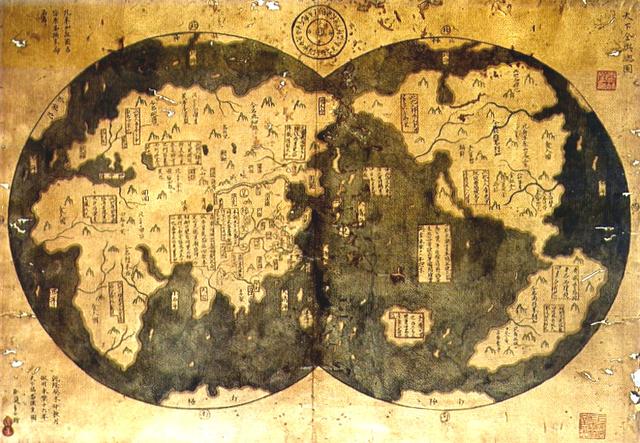
The more I traveled, the more I realized that maps tell only part of the story.
The real differences appear in local markets, neighborhood restaurants, family conversations, and traditional festivals.
These small details reveal far more about a place than statistics ever can.
Food Is Often the Best Introduction to Local Culture
Whenever I arrive in a new city, food is usually my first lesson.
It reflects climate, available ingredients, trade history, and even local values.
In southern China, fresh seafood and lighter cooking methods are common because of the warm climate and access to the sea.
Northern regions often feature heartier wheat-based dishes that suit colder winters.
When I later moved around Southeast Asia, I noticed similar patterns.
Thailand emphasizes fresh herbs, chili, lime, and aromatic spices.
Malaysia combines Malay, Chinese, and Indian influences into an incredibly diverse food culture.
The Philippines developed its own unique blend of indigenous traditions together with Spanish, Chinese, and American influences.
Food is never just about taste.
It is often a record of history served on a plate.
Geography shapes more than landscapes.
It shapes agriculture, architecture, transportation, local festivals, and even the rhythm of everyday life.
Understanding these connections makes traveling far more meaningful than simply visiting famous attractions.
Travel Teaches Us to See Beyond Stereotypes
One lesson that travel has taught me is that stereotypes rarely survive real conversations.
Before visiting a place, it is easy to build an impression from news reports, online videos, or social media discussions.
After spending time there, however, those simplified images usually become much more complicated.
The same is true for China.
With more than a billion people living across an enormous territory, it is impossible for one description to fit everyone.
People from different cities may have completely different lifestyles, priorities, and perspectives, even though they share the same nationality.
The same diversity can be found in almost every large country.
That is why I prefer listening before judging.
Talking with local people over a meal often reveals far more than reading hundreds of comments online.
Looking at China Through an Overseas Perspective
Living overseas has also changed the way I see my own country.
Distance provides a different perspective.
When I first arrived in Southeast Asia, I naturally noticed the differences.
Later, I began noticing the similarities.
Families everywhere want stability.
Parents everywhere hope their children will have better opportunities.
Small business owners everywhere work incredibly hard.
Students everywhere worry about exams and future careers.
Although customs may differ, many everyday hopes are surprisingly universal.
Travel helped me appreciate these common experiences more than the differences themselves.
Every Region Has Something Worth Learning
No place is perfect.
Every region has strengths, and every region faces challenges.
Some places are famous for business.
Others are known for craftsmanship, education, agriculture, technology, or cultural traditions.
Rather than asking which region is "the best," I think a more interesting question is:
"What can we learn from each other?"
That mindset has made every journey more rewarding.
Instead of comparing cultures, I have learned to appreciate them.
Instead of looking for superiority, I look for stories.
Every city, every village, and every family has a story worth hearing.
Final Thoughts
China cannot be understood through a single city, a single headline, or a single stereotype.
Its diversity has been shaped by geography, climate, migration, trade, and thousands of years of history.
Traveling through China—and later living across Southeast Asia—has taught me that understanding people requires patience.
Maps explain where places are.
History explains how they changed.
But only conversations help us understand why people live the way they do today.
That is the perspective I hope to continue sharing on HighTrulys.
Not to define cultures, but to explore them with curiosity, respect, and an open mind.
Explore More
› Chinese vs Thai Payment Methods: How Cashless Payments Are Changing Everyday Life
› Chinese Tea Culture vs Thai Tea Culture: A Journey Through Tradition, Taste, and Daily Life
› My Experience Living in the Philippines: Beyond Manila, Davao, and the Reality of Daily Life
› My First Impression of Kuala Lumpur: A Foreigner's Journey Through Malaysia, Culture, and Daily Life