Where Did the Chinese in Southeast Asia Come From?
The History of Fujian and Guangdong Migration to Nanyang
Meta Description:Discover where Southeast Asian Chinese communities came from. Explore the history of Fujian and Guangdong migration, ancient Chinese southern expansion, maritime trade routes, and how overseas Chinese societies were formed across Nanyang.
Introduction
When people talk about Chinese communities in Southeast Asia, many immediately think of cities such as Singapore, Bangkok, Kuala Lumpur, Jakarta, or Manila. Today, millions of people across Southeast Asia have Chinese ancestry, forming some of the most influential overseas Chinese communities in the world.
But where did these people come from?
The answer can be traced back mainly to the coastal provinces of Fujian and Guangdong, where generations of Chinese people crossed the sea and settled throughout Southeast Asia. These migrations were not a single event, but a long historical process that lasted for more than a thousand years.The story of Nanyang Chinese is a story of migration, survival, trade, hardship, and adaptation. Behind every overseas Chinese community was a journey across mountains and oceans, driven by economic opportunities, political changes, wars, and the search for a better life.
From ancient merchants traveling along maritime trade routes to ordinary farmers leaving their hometowns for Southeast Asia, these migrations gradually created the foundation of today's Chinese communities in countries such as Thailand, Malaysia, Singapore, Indonesia, Vietnam, the Philippines, and Myanmar.
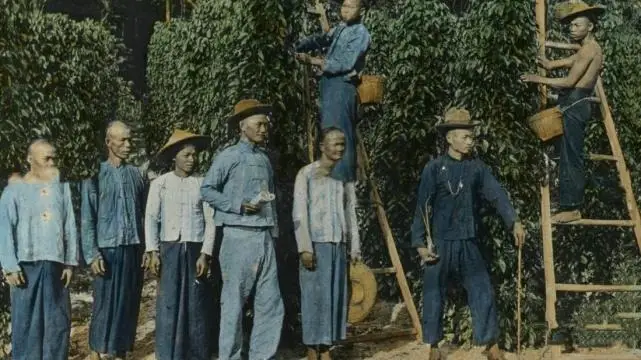
What Does "Nanyang Chinese" Mean?
The term Nanyang (南洋) literally means "Southern Ocean" and historically referred to the region south of China, especially Southeast Asia.In Chinese historical context, Nanyang included areas around:
- Malaysia
- Singapore
- Thailand
- Indonesia
- Vietnam
- Myanmar
- The Philippines
- Brunei
The term became widely used during the late Qing Dynasty and early modern period when large numbers of Chinese migrants traveled overseas to seek employment and opportunities.
Today, "Nanyang Chinese" generally refers to people of Chinese descent living in Southeast Asia, including both recent immigrants and families whose ancestors arrived hundreds of years ago.
These communities are not all the same. Different migration waves created different cultural groups, including:
- Minnan (闽南) people from southern Fujian- Teochew (潮州) people from eastern Guangdong- Cantonese (广东人) from the Pearl River Delta- Hakka (客家) communities- Hainanese (海南人)Each group brought its own language, customs, business networks, and traditions, shaping the diverse Chinese culture found across Southeast Asia today.
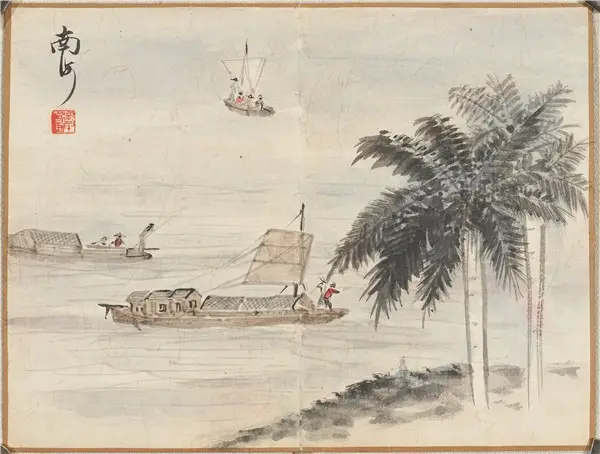
The Ancient Migration of Chinese People Toward the South
The history of overseas Chinese migration actually began long before modern times.
For thousands of years, China's population distribution was concentrated mainly in the northern plains, especially around the Yellow River region. Areas such as Henan, Shaanxi, and surrounding regions were political and cultural centers of many ancient Chinese dynasties.
However, northern China frequently experienced wars, political conflicts, and natural disasters. Whenever large-scale instability occurred, many people moved southward toward regions with more stable environments.
This long process gradually transformed southern China from a frontier region into one of the most important economic and cultural centers of the country.
The ancestors of many modern Fujian, Guangdong, Jiangxi, Hunan, and other southern populations were connected to these historical migration movements.
The First Large-Scale Southern Migration: The Yongjia Migration
One of the earliest major migrations occurred during the late Western Jin Dynasty.
Around 311 AD, the Yongjia Rebellion and the collapse of northern political control caused widespread instability in northern China. Many aristocrats, scholars, and ordinary people moved south across the Yangtze River.This event is historically known as:
"Yiguan Nandu" (衣冠南渡)meaning "the migration of the imperial clothing and culture to the south."
The migration brought:
- Population growth in Jiangnan regions
- Agricultural development
- Expansion of Chinese culture and education
- New economic centers south of the Yangtze River
Over time, southern China became increasingly connected with the traditional Chinese cultural system.
Later Migrations During the Tang and Song Dynasties
Large-scale migration continued during later periods.
The An Lushan Rebellion and Southern Economic Growth
After the An Lushan Rebellion in the Tang Dynasty (755 AD), northern China suffered prolonged warfare.
Many people moved toward:
- The Yangtze River region
- Jiangxi
- Fujian
- Guangdong
- Sichuan
This migration accelerated the economic development of southern China.
During the Tang and Song dynasties, the economic center of China gradually shifted from the north to the south.
The Song Dynasty Migration and the Development of Coastal China
After the fall of the Northern Song Dynasty in 1127, the Song government moved south and established the Southern Song Dynasty.
Large numbers of people migrated into:
- Zhejiang
- Fujian
- Guangdong
- Jiangxi
During this period:
- Maritime trade expanded rapidly
- Coastal cities became important commercial centers
- Fujian became one of China's major maritime gateways
This historical background later helped create the conditions for overseas migration.
Why Did Fujian and Guangdong Become the Main Sources of Overseas Chinese?
Although Chinese migration to Southeast Asia involved people from many regions, the majority of early overseas Chinese communities came from Fujian and Guangdong.The reason was not accidental. Geography, economy, maritime traditions, and historical development all played important roles.
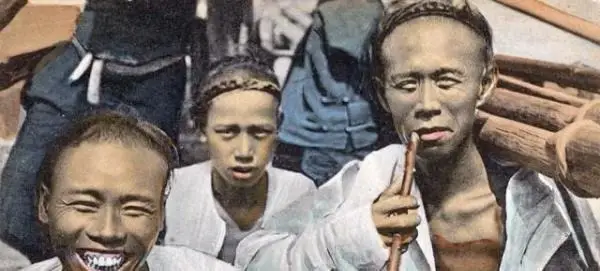
Fujian: China's Maritime Migration Gateway
Fujian is located on China's southeastern coast, facing the Taiwan Strait and the South China Sea.
Unlike northern provinces dominated by large plains, Fujian has:
- Mountains covering much of the land
- Limited agricultural space
- A long coastline
- Numerous natural harbors
For many centuries, population growth created pressure on local resources. Many Fujian residents began looking toward the sea for opportunities.
The ocean became not only a boundary but also a pathway.
Fujian people developed strong maritime traditions, including:
- Fishing
- Shipbuilding
- Coastal trade
- Overseas commerce
Cities such as Quanzhou became major international ports during the Song and Yuan dynasties.
At its peak, Quanzhou was one of the largest trading ports in the medieval world, connecting China with:
- Southeast Asia
- India
- Arabia
- Persia
- East Africa
These early maritime networks created the foundation for later Fujian migration.
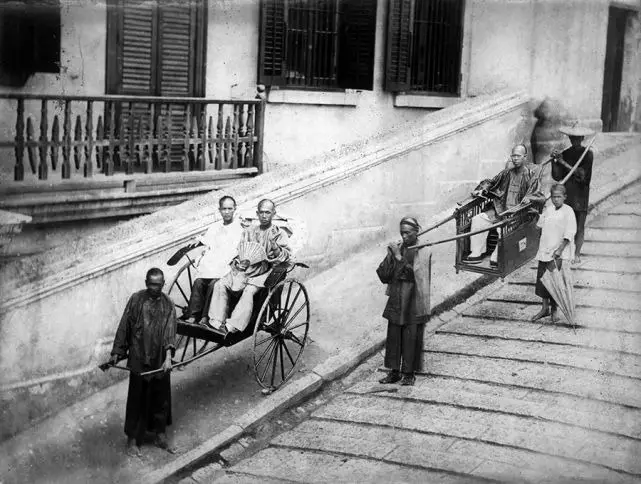
The Minnan People and Overseas Networks
Many overseas Chinese communities in Southeast Asia originated from southern Fujian.
They are often known as:
Minnan (闽南) peopleTheir traditional language is commonly called:
Hokkien / FujianeseMajor destinations included:
- Taiwan
- The Philippines
- Malaysia
- Singapore
- Indonesia
- Thailand
Because Fujian migrants often traveled through family and village networks, overseas communities gradually developed strong connections.
A person who migrated overseas would often help relatives, neighbors, or people from the same hometown follow the same route.
This created what historians call:
chain migrationA migration path that began with a few individuals could eventually develop into a large overseas community.
Guangdong: The Center of Southern Chinese Migration
Guangdong became another major source of overseas Chinese migration.
Located near the South China Sea, Guangdong had several advantages:
- Access to international shipping routes
- Major trading ports
- Close connections with Southeast Asia
- A large coastal population
Important migration groups from Guangdong included:
- Cantonese people
- Teochew people
- Hakka people
Each group developed its own migration networks.
Cantonese Migration
The Pearl River Delta region produced many Cantonese migrants.
Cities and regions such as:
- Guangzhou
- Foshan
- Jiangmen
- Zhongshan
- Taishan
became important sources of overseas migration.
Cantonese migrants played significant roles in:
- Southeast Asian commerce
- Construction
- Manufacturing
- Banking
- Community organizations
Large Cantonese communities developed in:
- Malaysia
- Singapore
- Thailand
- Vietnam
- North America
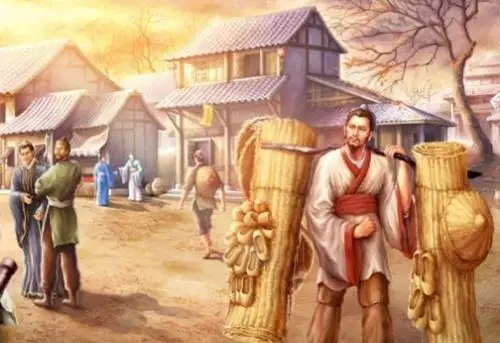
Teochew Migration
The Teochew people originated from eastern Guangdong, especially the Chaoshan region.
They became particularly influential in:
- Thailand
- Cambodia
- Singapore
- Vietnam
Teochew migrants were well known for:
- Business networks
- Trade connections
- Strong community organizations
In Thailand, many successful Chinese-Thai business families have Teochew ancestry.
Hakka Migration
The Hakka people were another important migration group.
Unlike coastal Fujian and Guangdong communities, many Hakka populations had a history of repeated internal migration within China before moving overseas.
Their migration destinations included:
- Malaysia
- Indonesia
- Thailand
- Singapore
Hakka communities often became involved in:
- Agriculture
- Mining
- Small businesses
- Local trade
Their strong community identity helped preserve language and traditions overseas.
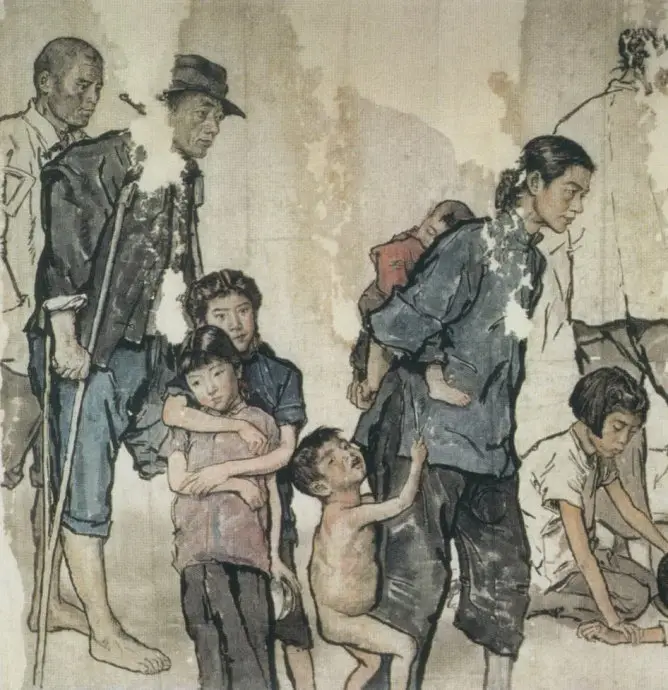
Why Did Chinese People Leave Their Hometowns?
Migration was usually caused by a combination of factors rather than a single reason.
1. Population Pressure
Many coastal areas had limited farmland.
As families grew larger, younger generations faced difficulties finding enough land to support themselves.
For many people, overseas migration became a way to improve their economic situation.
2. Economic Opportunities
Southeast Asia offered many opportunities:
- Trade
- Agriculture
- Mining
- Port activities
- Construction
Chinese merchants had already established trading connections in the region, making migration easier for later generations.
3. Political Instability and Wars
Throughout Chinese history, wars and political changes repeatedly pushed people to seek safer places.
Major migration periods occurred during:
- The collapse of dynasties
- Civil conflicts
- Foreign invasions
- Regional instability
Southern coastal areas became important destinations, and later some residents continued moving overseas.
4. Existing Maritime Connections
Once trade routes existed, migration became easier.
Ships that carried goods across the South China Sea also carried people.
The same maritime network that transported:
- Tea
- Porcelain
- Silk
- Spices
also transported migrants looking for new opportunities.
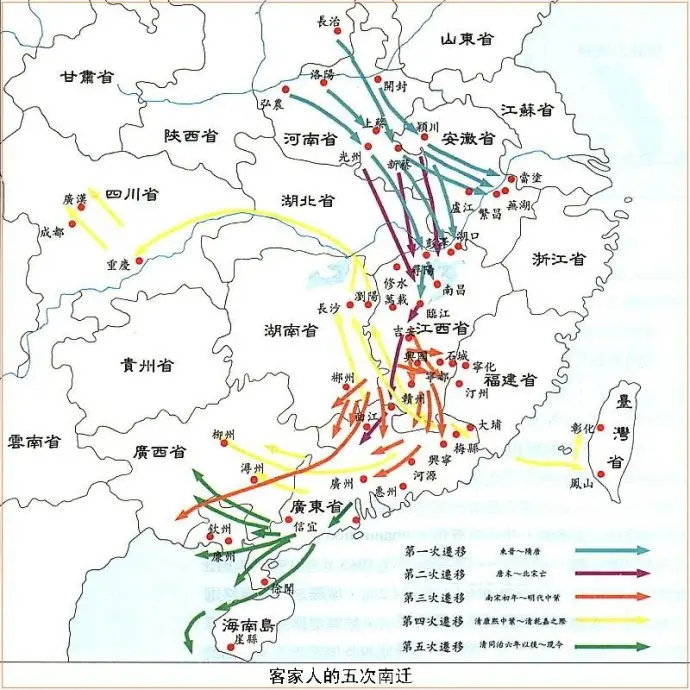
The Maritime Routes From China to Southeast Asia
Chinese migration to Southeast Asia mainly followed several maritime routes.
The Fujian Route
Fujian migrants usually traveled through:
Fujian ports → Taiwan Strait → South China Sea → Southeast AsiaCommon destinations:
- Philippines
- Indonesia
- Malaysia
- Singapore
The Guangdong Route
Guangdong migrants often traveled from:
Guangdong ports → South China Sea → Southeast AsiaMajor destinations:
- Thailand
- Vietnam
- Malaysia
- Indonesia
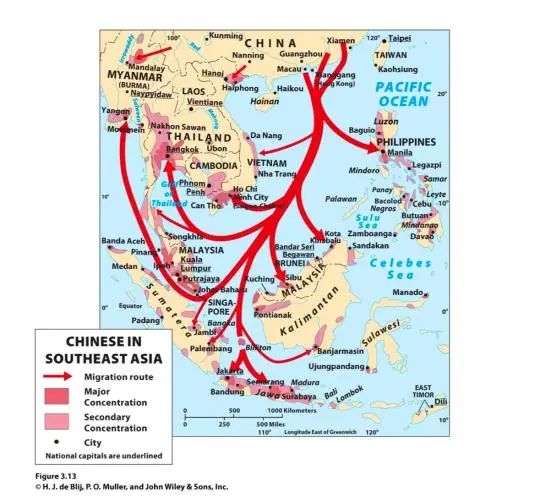
Major Arrival Areas in Southeast Asia
Over centuries, Chinese migrants settled across the region.
Malaysia and Singapore
Chinese communities became deeply involved in:
- Trade
- Mining
- Agriculture
- Manufacturing
Today, Malaysia and Singapore have some of the largest Chinese populations outside Greater China.
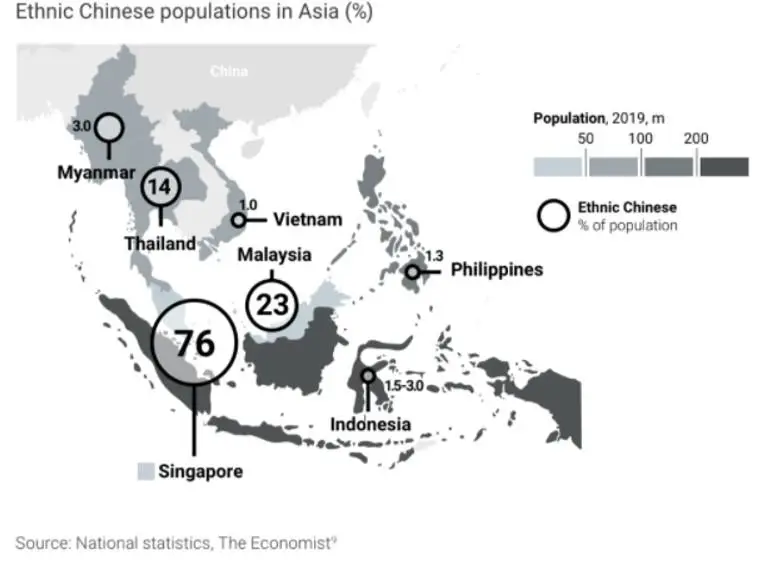
Thailand
Chinese migration to Thailand has a long history.
Many Chinese migrants integrated into Thai society through:
- Business
- Marriage
- Local communities
The Chinese-Thai population became an important part of Thailand's economic development.
Indonesia
Chinese Indonesians have a history dating back centuries.
They participated in:
- Maritime trade
- Commerce
- Local industries
Many communities developed around major ports.
Philippines
Fujian migrants were among the earliest Chinese groups arriving in the Philippines.
They played important roles in:
- Trade
- Retail
- Manufacturing
From Traders to Settlers
Early Chinese migration was not simply a movement of poor workers.
Different groups migrated for different reasons.
Some were:
- Merchants seeking new markets
- Sailors following trade routes
- Craftsmen looking for opportunities
- Farmers searching for land
- Laborers seeking employment
Over generations, temporary migration often became permanent settlement.
Families were established, businesses were created, and new Chinese communities gradually became part of Southeast Asian societies.
The Difficult History of Chinese Overseas Labor Migration
The history of Chinese migration to Southeast Asia was not always a story of opportunity and success.
While some migrants traveled voluntarily through trade networks, many others left China during difficult periods because they had limited choices.
The 19th century was one of the most challenging periods in Chinese history. Political instability, economic hardship, population pressure, and foreign conflicts pushed millions of people to search for survival opportunities overseas.
For many migrants, Southeast Asia became a destination of hope. However, the journey itself was often dangerous and filled with hardship.
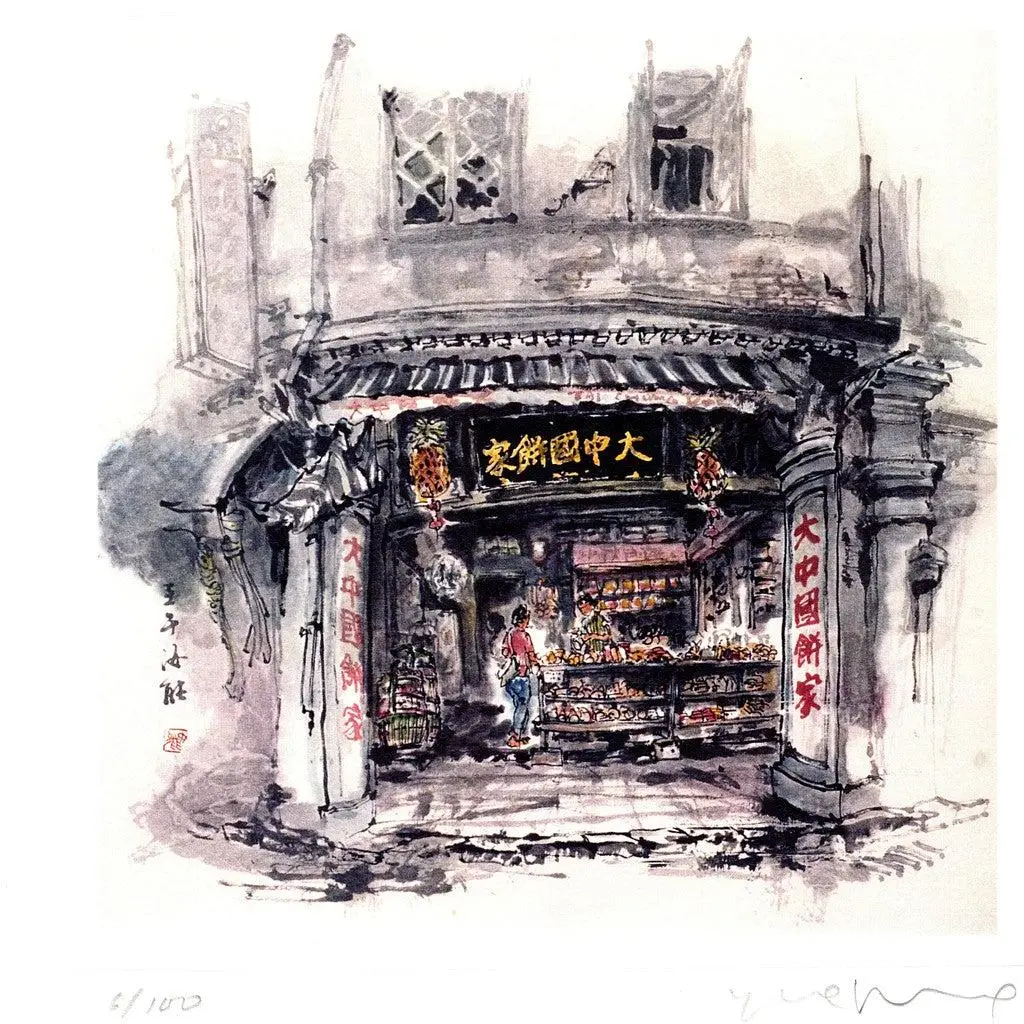
The Coolie Trade: A Dark Chapter of Chinese Migration History
During the 19th and early 20th centuries, millions of Chinese workers were transported overseas under systems often known as the coolie trade.The word "coolie" was used historically by colonial powers to describe Asian laborers, especially Chinese and Indian workers hired for difficult manual labor.
This period is remembered as one of the darkest chapters in the history of overseas Chinese migration.
Many workers were recruited under unfair conditions, deceived by intermediaries, or forced into labor contracts they did not fully understand.
Why Did the Coolie System Appear?
Several historical factors contributed to the rise of this labor migration system.
Economic Difficulties in China
During the late Qing Dynasty, many ordinary people faced serious challenges:
- Land shortages
- Natural disasters
- Poverty
- Local conflicts
- Economic instability
For many rural families, overseas employment appeared to be one of the few ways to improve their situation.
The Growth of Colonial Economies
At the same time, European colonial powers needed large numbers of workers for economic expansion.
After the decline of the Atlantic slave trade, colonial companies searched for alternative labor sources.
Chinese workers were recruited for projects such as:
- Southeast Asian plantations
- Mining operations
- Railway construction
- Agricultural development
- Port construction
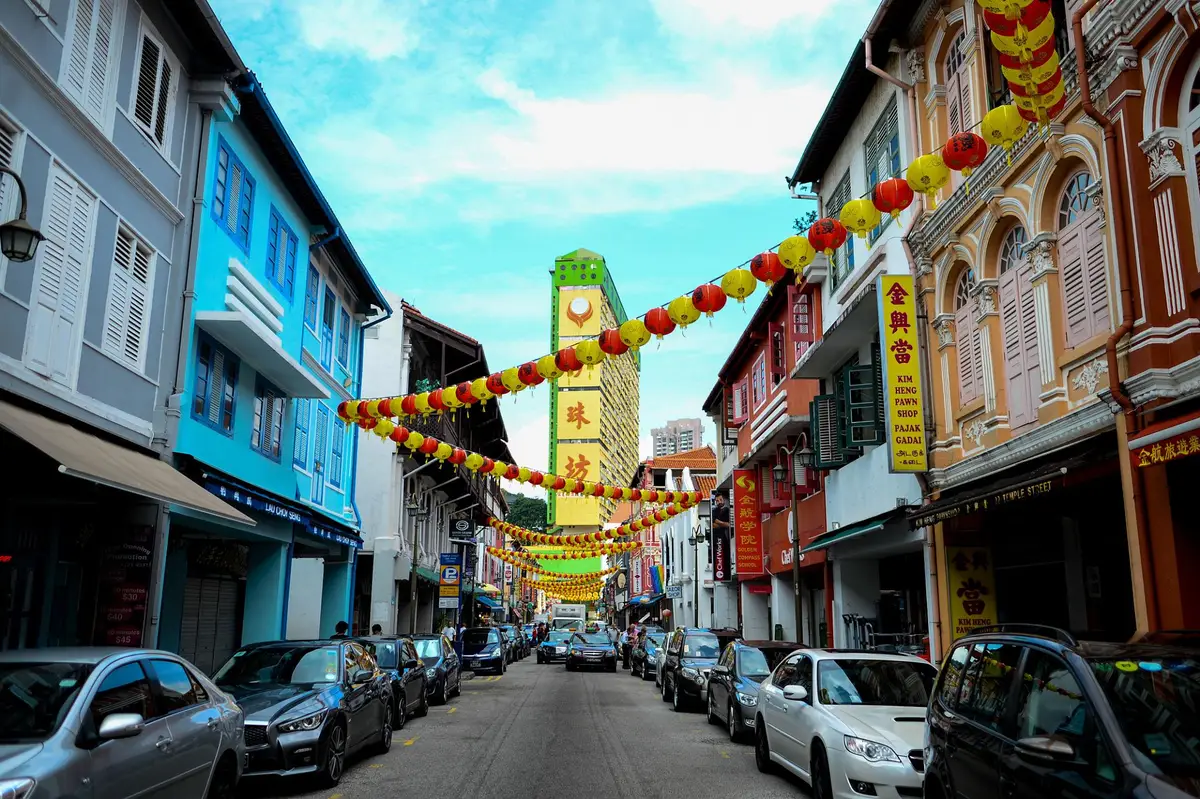
How the Coolie Recruitment System Worked
The process often involved several stages.
Recruitment
Labor brokers, known as coolie agents, traveled through rural areas and ports to recruit workers.Some promised:
- High wages
- Better living conditions
- Overseas opportunities
However, many workers later discovered that reality was very different.
Contract Labor
Many migrants signed labor contracts.
On paper, these agreements described temporary employment.
In reality, some workers experienced:
- Restricted freedom
- Heavy debt
- Harsh working conditions
- Difficulty returning home
Because many migrants were poor and had limited education, they often had little ability to negotiate their contracts.
Overseas Transportation
The journey across the ocean was one of the most difficult stages.
Ships were often overcrowded, and conditions could be extremely poor.
Migrants faced:
- Disease
- Lack of food and water
- Long voyages
- Dangerous transportation conditions
Some did not survive the journey.
Major Destinations of Chinese Labor Migration
Chinese laborers were transported to many parts of the world.
Southeast Asia
Large numbers went to:
- Malaya (present-day Malaysia)
- Singapore
- Indonesia
- Thailand
- Vietnam
- Myanmar
They worked in industries such as:
- Tin mining
- Rubber plantations
- Agriculture
- Construction
The Americas
Chinese laborers also went to:
- United States
- Canada
- Cuba
- Peru
They contributed to major infrastructure projects, including railway construction.
The completion of many large projects involved enormous contributions from Chinese workers, although they often faced discrimination and difficult conditions.
From Laborers to Community Builders
Despite difficult beginnings, many overseas Chinese migrants eventually created stable communities.
After completing labor contracts, some workers:
- Opened small businesses
- Entered trade
- Established families
- Created local organizations
Over time, these communities developed their own social structures.
The Formation of Overseas Chinese Networks
One of the most important features of overseas Chinese history was the development of community networks.
These networks helped migrants survive in unfamiliar environments.
They included:
- Family associations
- Hometown associations
- Business partnerships
- Cultural organizations
Family and Clan Associations
Traditional Chinese society placed strong importance on family connections.
Overseas migrants often organized communities based on:
- Shared hometown origins
- Common surnames
- Regional languages
For example:
- Fujian migrants supported other Fujian migrants
- Teochew communities helped newcomers from Chaoshan
- Cantonese associations connected people from Guangdong
These organizations provided:
- Assistance for new arrivals
- Business connections
- Social support
- Cultural activities
Chinese Business Networks in Southeast Asia
Many overseas Chinese communities gradually became involved in commerce.
Early businesses often started as:
- Small shops
- Trading companies
- Food businesses
- Shipping services
Through generations of experience, some families expanded into:
- Manufacturing
- Banking
- Real estate
- International trade
A major reason for their success was not only individual effort but also strong community networks built over generations.
Preserving Chinese Culture Overseas
Although overseas Chinese communities adapted to local societies, many continued preserving cultural traditions.
They maintained:
- Chinese festivals
- Family traditions
- Language schools
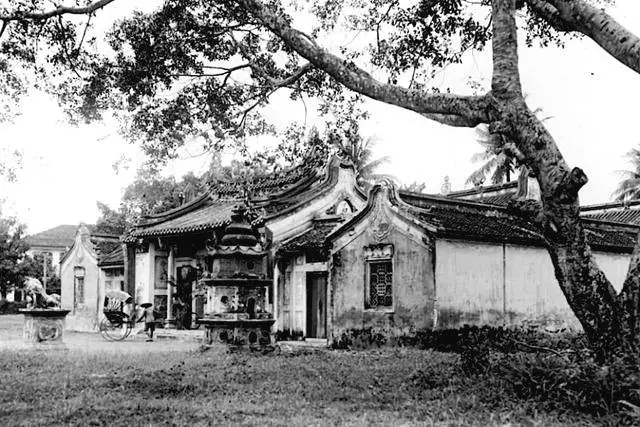
- Temples
- Community organizations
Examples include:
- Lunar New Year celebrations
- Ancestor worship
- Traditional food culture
- Chinese language education
At the same time, overseas Chinese communities also absorbed local cultures, creating unique identities that were neither completely Chinese nor completely local.
The Birth of Nanyang Chinese Identity
After several generations, many overseas Chinese developed a new identity.
They became:
- Chinese by ancestry
- Southeast Asian by nationality
- Local by culture and experience
This unique identity can be seen throughout Southeast Asia today.
For example:
- Chinese Malaysians combine Chinese heritage with Malaysian culture
- Thai Chinese communities integrate Chinese traditions with Thai society
- Singapore's Chinese population developed a multicultural identity
The Contribution of Overseas Chinese Communities
The history of Nanyang Chinese is not only a migration story.
It is also a story of contribution.
Overseas Chinese communities participated in:
- Regional trade development
- Urban growth
- Industrialization
- Education
- Philanthropy
Many Southeast Asian cities grew alongside Chinese commercial networks.
Markets, ports, and business districts often developed around early Chinese settlements.
Chinese Communities in Modern Southeast Asia
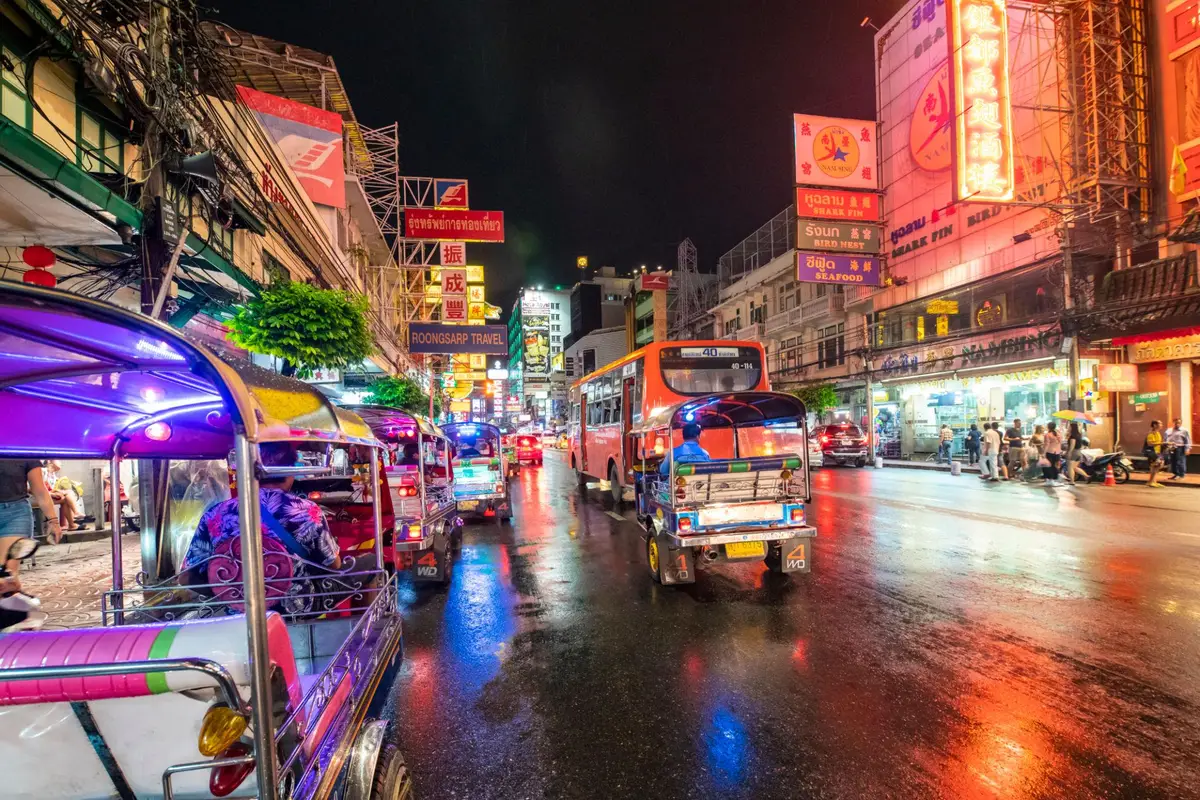
Today, descendants of Chinese migrants can be found throughout almost every country in Southeast Asia.
Although each country has its own history and relationship with Chinese communities, they all share a common background: generations of migration, adaptation, and cultural exchange.
The overseas Chinese experience is not simply about maintaining an old identity. It is also about becoming part of the societies where they settled.
Chinese Communities in Thailand
Thailand has one of the most integrated Chinese communities in Southeast Asia.
Chinese migration to Siam (the historical name of Thailand) began centuries ago, especially through maritime trade between southern China and Southeast Asian ports.
Many early migrants came from:
- Teochew communities in Guangdong
- Hokkien communities from Fujian
- Hainanese communities
Chinese immigrants became involved in:
- Trading networks
- Agriculture
- Manufacturing
- Transportation
- Finance
Over generations, many Chinese families integrated deeply into Thai society through:
- Intermarriage
- Language adaptation
- Local education
- Participation in national development
Today, many Thai Chinese families have lived in Thailand for several generations and consider themselves fully part of Thai society while still preserving elements of Chinese heritage.
Chinese Communities in Malaysia and Singapore
Malaysia and Singapore have some of the most historically significant Chinese communities outside Greater China.
Large-scale Chinese migration increased during the 19th century, especially during the development of:
- Tin mining
- Rubber plantations
- Port cities
Major migration groups included:
- Hokkien
- Cantonese
- Teochew
- Hakka
- Hainanese
Chinese communities played important roles in developing cities such as:
- Kuala Lumpur
- Penang
- Singapore
Many early Chinese settlements grew around commercial areas, markets, and ports.
Over time, these communities established:
- Schools
- Temples
- Associations
- Newspapers
- Business organizations
Today, Chinese Malaysians and Singaporeans are an important part of the cultural and economic landscape of both countries.
Chinese Communities in Indonesia
Indonesia has one of the oldest Chinese communities in Southeast Asia.
Chinese traders had already reached the Indonesian archipelago centuries ago through maritime routes.
They settled in major trading areas including:
- Java
- Sumatra
- Borneo
Historically, Chinese Indonesians participated in:
- Trade
- Agriculture
- Manufacturing
- Retail
Many communities developed around important ports because maritime commerce was the foundation of early migration.
Over hundreds of years, Chinese Indonesians created a unique cultural identity influenced by both Chinese traditions and Indonesian society.
Chinese Communities in the Philippines
The Philippines has a long history of Chinese interaction dating back before European colonial rule.
Many early Chinese migrants came mainly from southern Fujian.
They participated in:
- Local trade
- Handicrafts
- Retail businesses
Chinese communities became important parts of cities such as Manila.
Over generations, many Chinese Filipinos developed a blended identity combining:
- Chinese family traditions
- Filipino culture
- Local languages
Chinese Communities in Vietnam and Myanmar
Chinese migration also shaped societies in Vietnam and Myanmar.
In Vietnam, many Chinese communities are known as Hoa people.They historically participated in:
- Commerce
- Urban trade
- Manufacturing
In Myanmar, Chinese communities developed around:
- Border trade
- Mining areas
- Major cities
These communities demonstrate how migration networks connected different parts of Southeast Asia.
The Cultural Legacy of Nanyang Chinese
The influence of overseas Chinese communities can be seen throughout Southeast Asia.
Their contributions are not limited to economics.
They also shaped:
- Food culture
- Languages
- Architecture
- Festivals
- Education
- Urban development
Food Culture
Many popular Southeast Asian foods reflect Chinese influence combined with local traditions.
Examples include:
- Noodles
- Dumplings
- Rice dishes
- Stir-fried dishes
- Soy-based foods
However, these foods were not simply copied from China.
Over generations, Chinese cuisine adapted to local ingredients and tastes, creating unique Southeast Asian versions.
Language and Cultural Diversity
Overseas Chinese communities brought many different Chinese languages overseas.
These include:
- Hokkien
- Cantonese
- Teochew
- Hakka
- Hainanese
- Mandarin
Unlike a single unified language group, overseas Chinese communities have always been linguistically diverse.
This diversity reflects the different regions of China from which migrants originated.
The Importance of Ancestral Memory
For many overseas Chinese families, migration history remains an important part of family identity.
Some families continue to remember:
- The hometown of their ancestors
- The villages where their families originated
- The difficult journeys their ancestors experienced
Genealogy records, ancestral halls, and family traditions preserve these memories.
For many descendants, their ancestors' decision to cross the ocean represents courage, sacrifice, and hope for future generations.
The Meaning of Nanyang Migration Today
The story of Nanyang Chinese is ultimately a story of human movement.
Millions of ordinary people crossed borders not knowing what the future would bring.
Some became merchants.
Some became workers.
Some built new families in unfamiliar lands.
Many faced discrimination, poverty, and hardship.
Yet through perseverance and adaptation, they created communities that became an important part of Southeast Asia.
Conclusion: A Thousand-Year Journey Across Mountains and Oceans
The Chinese communities of Southeast Asia did not appear overnight.
They were created through centuries of migration.
From ancient movements of people from northern China to southern regions, to the maritime expansion of Fujian and Guangdong migrants, and finally to overseas settlements across Southeast Asia, the history of Nanyang Chinese is a long journey of survival and transformation.
The ancestors of today's overseas Chinese carried with them:
- Languages
- Traditions
- Skills
- Family values
- A desire for a better future
Their journey was often difficult, but it changed the history of Southeast Asia.
Today, Chinese communities across the region are not only descendants of migrants. They are also builders of new societies, shaped by both Chinese heritage and Southeast Asian experiences.
The story of Nanyang Chinese reminds us that migration is not only about leaving a homeland.
It is also about creating a new home.
Explore More
› The Evolution of PHP Frameworks: From CodeIgniter to Laravel
› My Favorite Linux Distributions: RHEL, AlmaLinux, and Fedora from a Developer's Perspective
› How to Optimize IBus Chinese Input on Linux: A Practical Configuration Guide
› Why Did Chinese Merchants Spread Across Southeast Asia
› Why Is Fried Rice in Southeast Asia Often Different From Chinese Fried Rice
› How I Learned to Use Grab in Southeast Asia: Lessons From the Philippines, Thailand, and Malaysia
› What I Learned Living Abroad: Lessons From Five Years in Southeast Asia